
After 21 gruelling hours of negotiations, US-Iran peace talks ended without an agreement — and the financial world is bracing for impact.
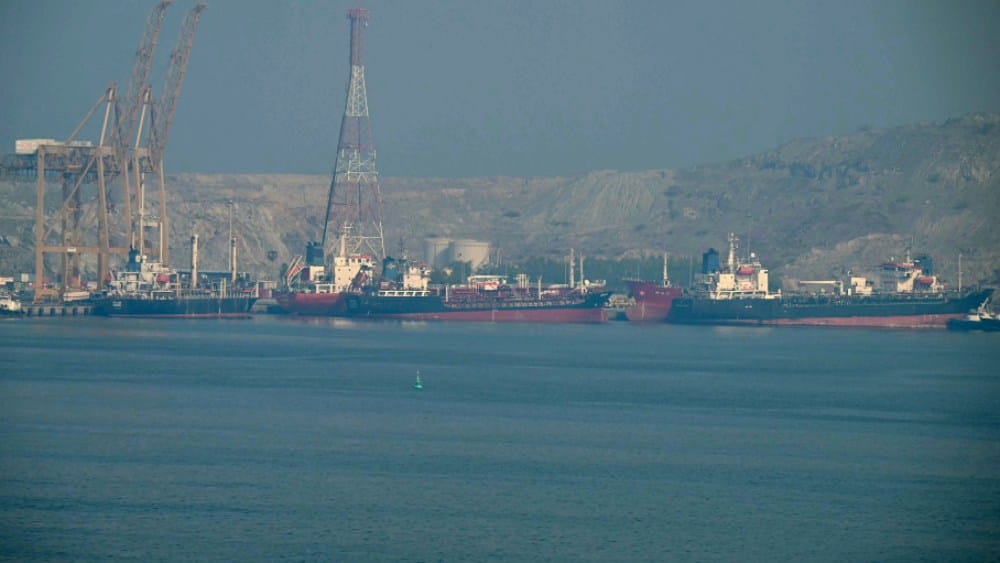
Vice President JD Vance announced the breakdown of talks at a press conference in Islamabad on Sunday, confirming what many market watchers had feared. Minutes later, President Donald Trump announced that the United States Navy would immediately begin blockading the Strait of Hormuz — one of the most critical shipping lanes on the planet, through which roughly 20% of the world’s oil and liquefied natural gas supply flows daily.
The ongoing military conflict, which began in February, had already effectively halted traffic through the strait, sending fuel prices surging. A formal naval blockade now layers an entirely new level of risk on top of an already fragile global energy market.
Here is what leading voices in business, finance, and economics are saying about what comes next.
“Not Looking Good for Fuel Prices Globally”
Patrick De Haan, head of petroleum analysis at GasBuddy, was among the first to react, warning that the failed deal almost certainly means continued pressure at the pump for consumers everywhere.
“With the US not coming to agreement or terms with Iran, it is likely that the Strait will remain under their control and that oil prices and thus gasoline, diesel and jet fuel prices keep rising,” he wrote on social media, adding plainly: “Not looking good for fuel prices globally.”
For everyday consumers already feeling the strain of elevated energy costs, that assessment offers little comfort.
A Market Crash “Quite Possible,” Warns Former JPMorgan Strategist
Marko Kolanovic, a former chief market strategist at JPMorgan, did not mince words in his assessment of the market fallout. He noted that an earlier — and ultimately premature — announcement of a peace deal had already triggered a significant market swing, with oil dropping roughly 15%, broad stocks rallying around 5%, and technology stocks surging as much as 25%.
With that deal now exposed as hollow, he warned those gains could entirely reverse.
“Crash is quite possible,” he wrote bluntly.
The Critical Question Markets Are Asking on Monday
Kyle Rodda, an analyst at Capital.com, framed the situation around the single most important question now hanging over global financial markets.
Speaking to Bloomberg, he said: “The key question for Monday is whether markets interpret this as a temporary breakdown in negotiations or a structural collapse of the ceasefire framework. That distinction will determine whether the risk-off move fades quickly or extends further.”
In other words — is this a bump in the road, or the beginning of something far more serious?
“The Relief Trade Is Likely to Fade”
Charu Chanana, chief investment strategist at Saxo Markets, struck a similarly cautious tone. She told Bloomberg that the failure to reach a deal removes the optimism that had briefly lifted markets, and warned of fresh turbulence ahead.
“The talks ending without a deal is a setback. For markets, this means the relief trade is likely to fade. Oil may see fresh gains, risk sentiment takes a hit again, and Hormuz is likely to remain a live choke-point risk even if it is not fully shut,” she said.
“Iran AND the US Now Blocking the Flow of Oil”
Ron Insana, a former hedge fund executive and veteran financial journalist, highlighted the extraordinary nature of the current situation — one in which both Iran and the United States are simultaneously restricting traffic through the world’s most vital oil corridor.
“A US naval blockade of the Strait of Hormuz was announced by President Trump in the wake of failed talks with Iran. One assumes a risk-off market in stocks and a surge in oil prices when futures open — but who knows? Iran AND the US now blocking the flow of oil,” he wrote on social media Sunday.
Oil Could Surge 7% — Or Far More
Shay Boloor, chief market strategist at Futurum Equities, warned that the blockade “immediately raises the risk of a much broader escalation around global oil flows.”
He added that oil markets were already indicating a potential move higher of around 7% in the immediate aftermath of Trump’s announcement — and that was before markets had fully digested the implications.
“The Largest Supply Shock — Nothing Even Comes Close”
Don Johnson, chief economist at Macro Edge Advisory Group, went further than most in characterising the severity of what is unfolding.
“A renewed escalation scenario means boots on the ground in the next couple of weeks, and keep an eye on the Red Sea — a lose-lose scenario for the globe if this worsens further,” he wrote, describing the blockade as “the largest supply shock with nothing even coming close.”
Oil Should Be at $140-$150 a Barrel — Maybe More
Jorge Montepeque, a managing director at energy and commodities market maker Onyx Capital Group, made perhaps the most alarming assessment of the day. While oil prices jumped sharply to between $104 and $106 a barrel following the collapse of talks, Montepeque told Bloomberg TV that such levels are “not reflective at all” of the true risk.
He argued that prices should be closer to $140 to $150 a barrel to properly reflect the scale of potential disruption — and warned that if the blockade is enforced fully, global supply simply cannot absorb the losses. That, he said, could ultimately push oil toward $150 to $200 a barrel as prices rise to force demand lower.
Many traders, he noted, are currently betting the policy will be reversed under pressure. That may prove to be a costly assumption.
A Four-Pronged Global Risk — El-Erian’s Warning
Mohamed El-Erian, chief economic advisor at Allianz Group and one of the world’s most respected economists, described the US move as effectively doubling down on an existing crisis — layering America’s blockade on top of Iran’s own disruption of the strait.
He outlined four key pressure points rippling outward from the situation. Iran itself stands to lose critical oil export revenues and the transit charges it had been collecting from select vessels. Import-dependent nations — including major economies like China and Pakistan — may struggle to maintain the oil flows they had previously secured. The United States faces escalating military costs and a rising risk of direct armed conflict. And for the broader global economy, businesses, governments, and households are likely to face a fresh surge in energy, helium, and fertilizer prices.
Markets May Be Underreacting
Peter Schiff, chief economist and global strategist at Euro Pacific Asset Management, raised a pointed observation — that despite the gravity of events, market reaction had so far appeared surprisingly muted.
“The collapse of peace talks and a US embargo of the Strait of Hormuz should have resulted in more than a 1.2% drop in S&P futures and an 8% pop in oil,” he wrote, suggesting that traders may simply be betting on Trump walking back the announcement via social media before markets open properly on Monday.
Whether that optimism proves well-founded or dangerously misplaced remains to be seen.
What This Means for Everyday People
Beyond the trading floors and analyst reports, the real-world implications of a prolonged Hormuz blockade are significant. Higher oil prices feed directly into petrol, diesel, jet fuel, and electricity costs. Supply chain disruptions ripple through to food prices, manufactured goods, and transportation. In an already strained global economy, a sustained energy shock of this scale could tip several major economies toward recession.
The coming days and weeks will be critical in determining whether diplomacy finds a path forward — or whether the world is heading into one of the most serious energy crises in recent history.