
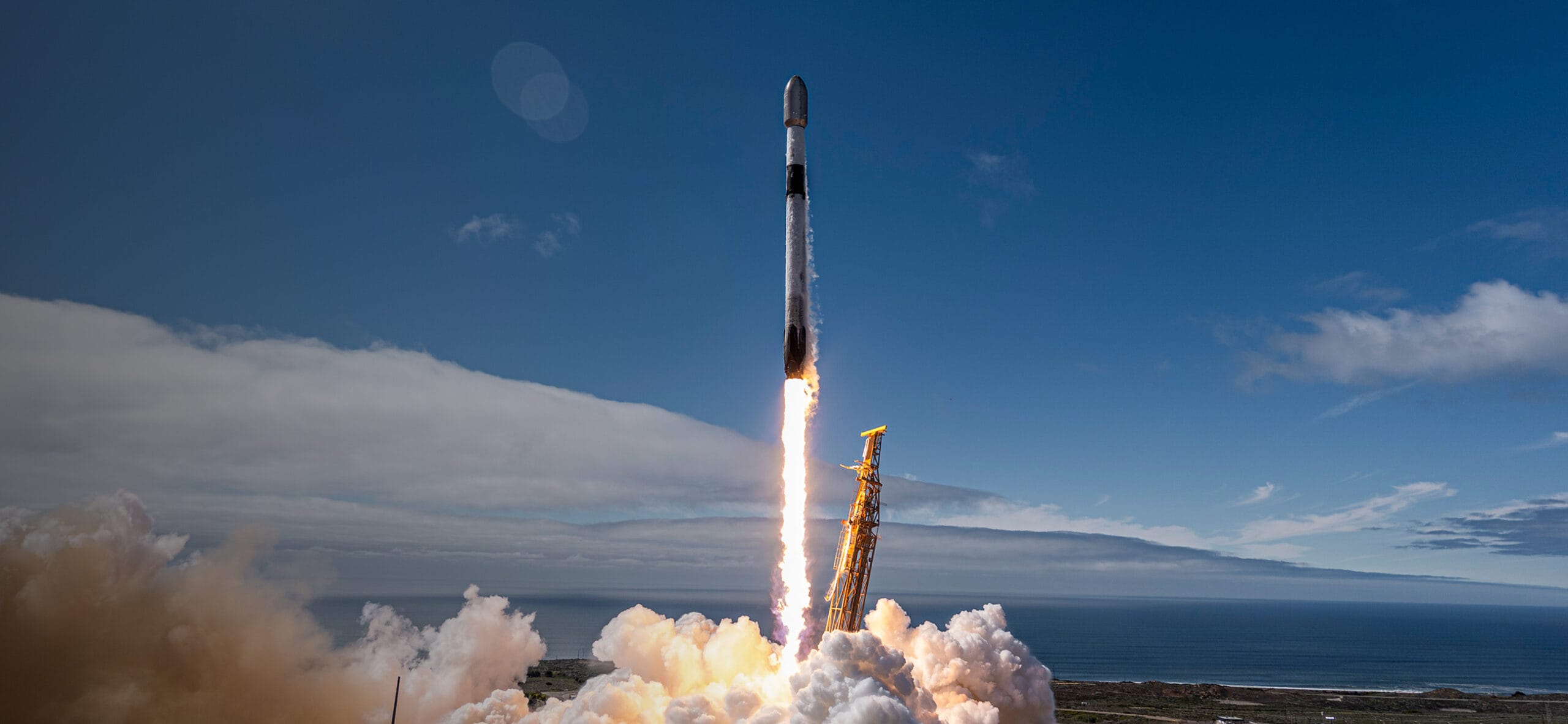
Florida’s Space Coast is at it again. After a record-shattering 109 orbital rocket launches in 2025, the pace in 2026 shows absolutely no signs of slowing. As of Monday, April 27, Florida has already logged 29 launches this year — and this week brings more action from both SpaceX and United Launch Alliance.
Here is everything you need to know about this week’s launches, when to watch, and where you can see them across Florida.
What Happened Today — SpaceX Falcon Heavy Scrubbed
SpaceX had planned to kick off the week with a rare Falcon Heavy launch from Kennedy Space Center on Monday morning. It did not happen. Poor weather conditions over the Space Coast forced the scrub. A new launch window for that mission — the ViaSat-3 F3 satellite — has not been confirmed yet, but teams are working toward a rescheduled attempt.
The Falcon Heavy is SpaceX’s most powerful operational rocket and is used far less frequently than the workhorse Falcon 9. When it does fly, it is worth watching.
Tonight’s Launch — ULA Atlas V With Amazon Leo Satellites
Tonight is still very much on. A United Launch Alliance Atlas V rocket — fitted with five solid rocket boosters — is scheduled to lift off from Cape Canaveral Space Force Station at 8:52 p.m. ET on Monday, April 27.
The mission carries the next batch of 29 Amazon Leo broadband satellites into orbit. Amazon Leo — the company’s ambitious answer to Elon Musk’s Starlink — has been ramping up its constellation rapidly, and tonight’s launch adds another significant chunk of that network.
Full Launch Schedule — Week of April 27
Monday, April 27 — ULA Atlas V (Amazon Leo 6)
| Detail | Info |
|---|---|
| Mission | 29 Amazon Leo broadband satellites |
| Rocket | ULA Atlas V — 5 solid rocket boosters |
| Launch Time | 8:52 PM ET |
| Location | Launch Complex 41, Cape Canaveral Space Force Station |
| Trajectory | Northeast |
| Sonic Booms | No |
Tuesday, April 28 — SpaceX Falcon Heavy (ViaSat-3 F3) — SCRUBBED
| Detail | Info |
|---|---|
| Mission | Boeing-built ViaSat broadband satellite to geosynchronous orbit — Asia-Pacific connectivity |
| Rocket | SpaceX Falcon Heavy |
| Launch Time | Scrubbed April 27 — new window TBA |
| Location | Pad 39A, NASA Kennedy Space Center |
| Trajectory | East |
| Sonic Booms | Yes — when rescheduled |
Friday, May 1 — SpaceX Falcon 9 (Starlink 10-38)
| Detail | Info |
|---|---|
| Mission | 29 Starlink broadband satellites to low-Earth orbit |
| Rocket | SpaceX Falcon 9 |
| Launch Window | 1:33 PM – 5:33 PM ET |
| Location | Launch Complex 40, Cape Canaveral Space Force Station |
| Trajectory | Northeast |
| Sonic Booms | No |
Where Can You Watch From?
You do not need to be standing at the launchpad to see a rocket climb into the sky. Florida’s geography makes launches visible across a wide stretch of the coastline.
Northeast trajectory launches — like tonight’s ULA Atlas V and Friday’s Starlink — can be spotted as far north as Jacksonville Beach, roughly 160 miles up the coast from Cape Canaveral. That is about a two-and-a-half-hour drive if you plan to position yourself early.
Southeast trajectory launches are often visible as far south as West Palm Beach — around 150 miles from the launch site.
Your best bet is always the Space Coast itself — Brevard County, the Treasure Coast, and Volusia County all offer solid sightlines depending on the trajectory. Check local weather and cloud cover before heading out.
ALSO READ: Amazon Buys Globalstar for $11.57 Billion to Take On Elon Musk’s Starlink
How to Watch Online
Not in Florida? No problem. NASA content — including many rocket launches — streams free through NASA+, available at plus.nasa.gov, on YouTube at youtube.com/NASA, and through the NASA mobile app.
NASA+ is also available through Amazon Prime Video as a free ad-supported channel. You do not need a Prime subscription to access it. Open Prime Video, head to the Live TV section at the top of the screen, and find NASA+ there.
A Big Month for Florida’s Space Coast
April has already delivered one of the most significant launches in years — NASA’s Artemis II mission on April 1, which carried four astronauts on a flyby around the Moon, farther than any human has travelled in space in decades. The launch was visible across much of the southeastern United States.
With the Amazon Leo constellation growing rapidly, Starlink continuing its relentless expansion, and SpaceX’s Falcon Heavy set to reschedule after Monday’s weather scrub, the rest of April and early May look busy for America’s busiest launch corridor.
📩 Stay ahead of every launch. Subscribe to the JournalTodays Newsletter for space and tech news delivered straight to your inbox.
Frequently Asked Questions
A: Yes. A ULA Atlas V rocket launches from Cape Canaveral Space Force Station at 8:52 PM ET on Monday, April 27, carrying 29 Amazon Leo satellites. The SpaceX Falcon Heavy launch scheduled for Monday was scrubbed due to weather.
A: SpaceX launches from two locations — Pad 39A at NASA’s Kennedy Space Center near Merritt Island, and Launch Complex 40 at Cape Canaveral Space Force Station.
A: Launches are most visible from the Space Coast in Brevard County. Northeast trajectory launches can be seen as far north as Jacksonville Beach. Southeast trajectory launches are often visible as far south as West Palm Beach.
A: SpaceX scrubbed the Falcon Heavy ViaSat-3 F3 launch on Monday, April 27 due to poor weather conditions over Kennedy Space Center. A new launch window has not been confirmed yet.
A: NASA+ streams many launches for free at plus.nasa.gov, on YouTube at youtube.com/NASA, and through Amazon Prime Video’s free Live TV section — no subscription required.