
India’s Ministry of External Affairs has formally condemned remarks by US Vice President JD Vance comparing H-1B visa workers to “indentured servants,” calling the language “deeply offensive” and warning that the US government’s decision to suspend major technology companies from the Permanent Labor Certification programme does not “advance the shared ambitions of both countries.”
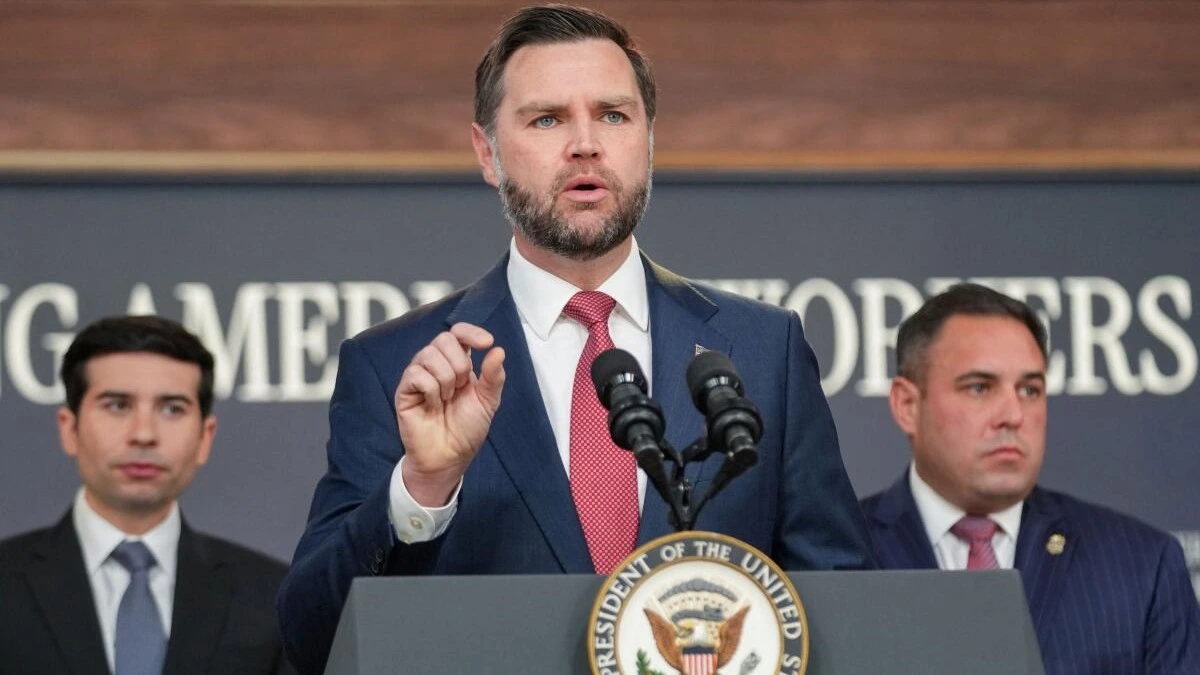
Vance made the remarks Thursday at a White House press conference as the Department of Labor announced it was suspending Microsoft, Adobe, and a group of major Indian IT firms — including Cognizant, Infosys, Tata Consultancy Services, Wipro, HCL Technologies, and Capgemini — from the PERM programme. The suspension means those companies cannot apply for permanent US residency on behalf of employees currently working on H-1B visas. Vance singled out Microsoft, which he said laid off 6,000 American workers last year while securing 6,300 H-1B visas and nearly 3,000 green cards.
“You cannot lay off American workers and then replace them with foreign indentured servants,” Vance said.
India’s Ministry of External Affairs responded Friday, accusing Vance of using “terminology that carries painful historical and colonial legacy connotations.” The ministry noted that colonial powers including Britain, the Netherlands, and France took more than 1.6 million Indian workers as indentured labourers to plantations and construction projects across their empires — a history that gives the specific language particular weight.
“Such descriptions are unwarranted and ignore the fact that Indian professionals in the United States are highly educated and skilled contributors to its economy and innovation ecosystem,” the ministry’s statement said.
What the PERM Suspension Actually Means
The PERM programme is a central step in the US employment-based green card process. Employers use it to demonstrate that no qualified US workers are available for a given role before sponsoring a foreign worker for permanent residency. Many H-1B visa holders — who work on temporary visas that typically require employer sponsorship to remain valid — depend on the PERM pathway to eventually obtain green cards.
Labor Secretary Keith Sonderling said the suspended companies had collectively received more than 230,000 H-1B visas and more than 100,000 permanent labour certifications since 2009. “That’s hundreds of thousands of jobs that were taken from American workers,” Sonderling said, calling the programme “rife with systemic fraud.”
Microsoft disputed the administration’s characterisation. The company said 80% of its roughly 6,000 H-1B visa applications last year were to extend or change the status of existing employees — not to hire new people replacing laid-off Americans — and that all remaining filings involved individuals already legally in the United States. Microsoft also said H-1B employees are paid at the same rate as other staff performing equivalent work.
Who Is Most Affected
The human impact falls disproportionately on Indian nationals. Indians account for approximately 70% of existing H-1B visa holders. Nearly one million Indians currently in the United States on work visas are stuck in the employment-based green card backlog — representing 79% of the total backlog of approximately 1.25 million people. Even before the PERM suspension, some Indian applicants in certain employment categories faced waits measured in decades.
Sonderling’s statement that the US will no longer process “any pending” permanent labour certification applications from the blacklisted companies has raised specific fears that tens of thousands of legally present workers — most of them Indian — who have been waiting for years may suddenly find their applications stalled indefinitely.
The Indian government assured its citizens Friday that the PERM suspension does not affect the validity of existing H-1B visas or the status of current H-1B holders and their dependents. But the pathway to permanent residency for those workers has been significantly complicated.
NASSCOM, the Indian IT industry body, said Indian technology companies have substantially reduced their dependence on H-1B visas in recent years and are increasingly hiring US domestic workers. Tata Consultancy Services said its H-1B applications were in “single digits” in each of the past two years and that the company plans to hire 15,000 people in the United States over the next five years.
The PERM suspension is the latest in a series of moves by the Trump administration targeting H-1B usage. The administration proposed a $103,000 application fee for H-1B visas in August, following an earlier version of a similar fee that was struck down by a federal judge in June.
Stay informed. Subscribe to the JournalTodays Newsletter for the latest US-India relations news, immigration policy coverage, and technology industry updates delivered straight to your inbox.