
The Ebola outbreak in the eastern Democratic Republic of the Congo is accelerating. The World Health Organization warned on Friday that the situation is “spreading rapidly” and has upgraded its national-level risk assessment from high to very high. With almost 750 suspected cases and 177 suspected deaths already recorded, the WHO’s Director-General made clear that the true scale of the epidemic is almost certainly larger than confirmed figures suggest.
At least 82 cases have been laboratory confirmed alongside seven confirmed deaths. But the WHO chief was direct about what those numbers represent. “We know the epidemic in the DRC is much larger,” he said during a press briefing. The regional risk level remains high while the global risk remains low — for now.
The outbreak’s epicentre sits in the DRC’s eastern provinces of North Kivu and Ituri, described by health officials as a “highly insecure” area where ongoing armed conflict has triggered a severe displacement crisis. That combination — active conflict, displaced populations, and a highly infectious disease — makes containment extraordinarily difficult.
Aid Workers Under Fire and Operations Under Threat
The crisis took a sharper turn on Thursday when medical tents and supplies were set on fire in Ituri in what the WHO described as a “security incident.” The WHO’s representative in the DRC, speaking via video link from the field, said the attack “significantly jeopardized” the Ebola response operations her team is working to establish in the hotspot area. Building trust with local communities, the WHO chief said, is “critical” — and incidents of this nature make that task considerably harder.
Contact tracing — the process of identifying and monitoring everyone who may have been exposed to a confirmed case — remains dangerously low in Ituri, particularly in the city of Bunia. More effective tracing is underway in North Kivu, though the overall picture is concerning. Without reliable contact tracing, the chain of transmission is nearly impossible to break.
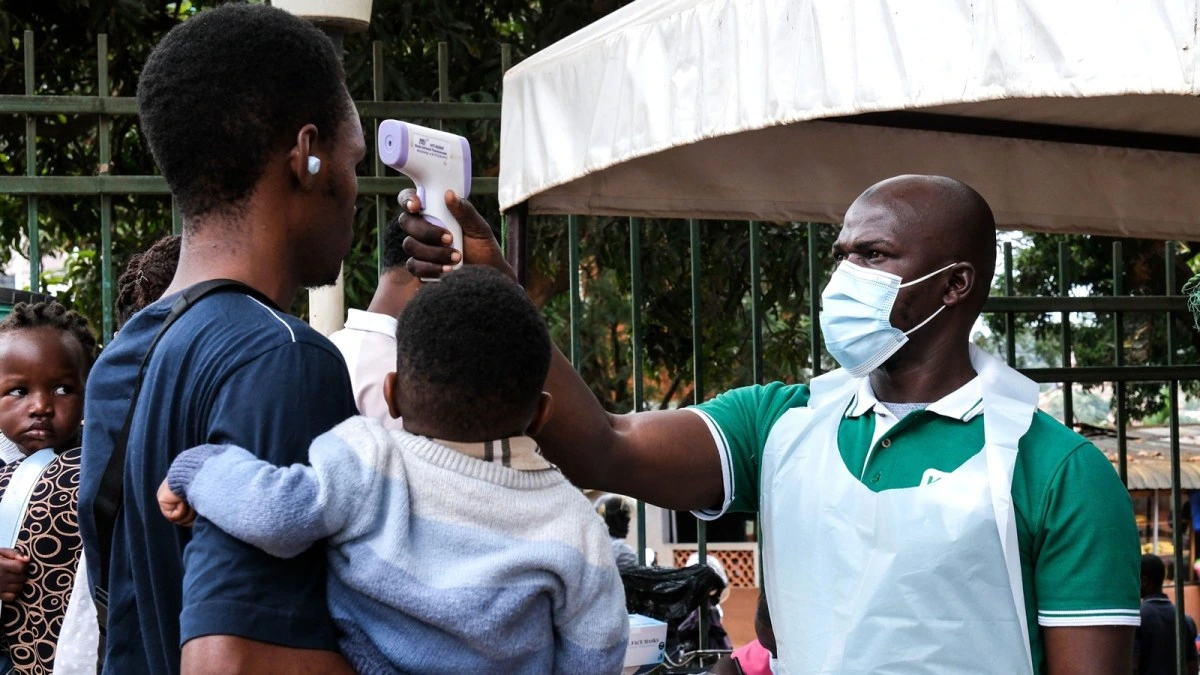
The outbreak has now crossed an international border. Uganda has confirmed two cases in individuals who travelled from the DRC, with one death recorded. The WHO described the situation in Uganda as “stable,” though three new cases were confirmed on Saturday morning — a development that underlines how quickly the picture can shift.
One American has also tested positive. Dr. Peter Stafford contracted Ebola while treating patients in the eastern DRC and was evacuated to Germany, where he is currently being treated in an isolation ward at Charité University Hospital in Berlin. The hospital described Stafford as “severely weakened” by the illness but said he does not currently require intensive care. His wife and children — classified as high-risk contacts — are in quarantine in a separate section of the ward. The family remains symptom-free.
The WHO continues to monitor the situation closely as response teams work under increasingly difficult conditions. With armed conflict, community distrust, and an attack on medical infrastructure all compounding the challenge, the path to containment remains deeply uncertain.
Stay informed. Subscribe to the JournalTodays Newsletter for the latest global health news and breaking world updates delivered straight to your inbox.