
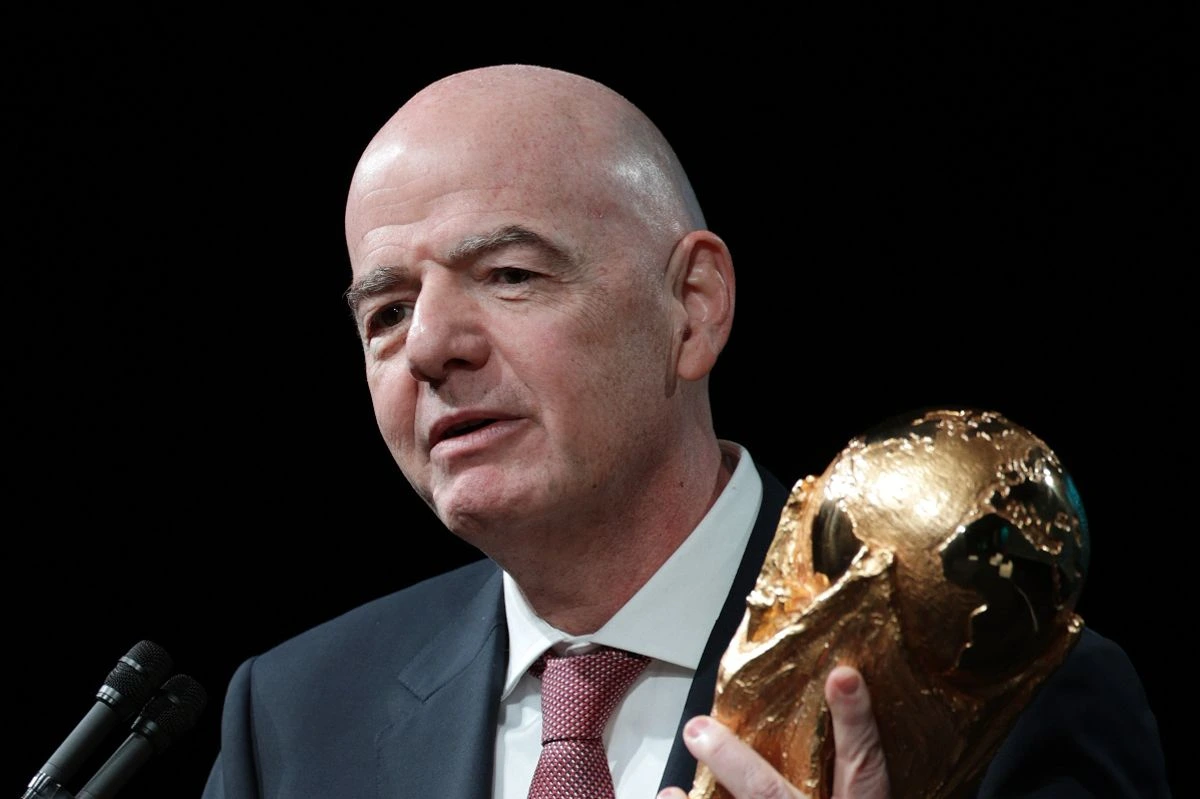
European football has drawn its hardest line in decades. UEFA and all 55 of its member associations voted unanimously Thursday to boycott every FIFA competition — starting with the Women’s Under-20 World Cup in Poland from September 5th — unless FIFA abandons its plan to sell a minority ownership stake in the World Cup and other competitions to private investors. The boycott threat puts the future of international football as it has existed for a century in immediate jeopardy and threatens to end the presidency of Gianni Infantino, who eleven days ago appeared to have a clear path to a fourth term in office.
“UEFA and its national associations will not participate in FIFA competitions,” the European body said after an urgent online meeting of its membership. “Some things are simply too important to sell. The FIFA World Cup belongs to football. It always will. And so long as Europe has a voice, it will never be for sale.”
What FIFA Is Proposing
Infantino’s plan — revealed Tuesday after being conceived in secret — would create a new $20 billion subsidiary called FIFA Forward Enterprise (FFE), with private investors acquiring up to a 20% minority stake. The FFE would control the commercial operations of the World Cup, including broadcast rights, sponsorships, ticketing, and licensing. The leading investor in the proposed deal is Thrive Eternal, a subsidiary of Joshua Kushner’s Thrive Capital — a firm that manages $60 billion in assets under management.
Infantino wrote to all 211 FIFA member associations to frame the deal as an opportunity: accept the FFE proposal and each member’s basic four-year funding doubles from $10 million to $20 million, with projected total funding through 2038 reaching $86 million per member instead of approximately $36 million. FIFA has said the new structure would not affect its governance of football as an international sport and that any revenue generated would be reinvested in the development of the game globally — across men’s, women’s, and youth football. A FIFA document obtained Thursday said the federation hoped to have all investment funds raised by the end of October if the proposal is approved in a September member vote.
UEFA’s characterisation of the funding offer was fundamentally different. The European body called it an ultimatum — “accept the irreversible capture of football’s greatest competitions or bear the consequences” — and described the entire process as “governance by intimidation” conducted without meaningful consultation with football’s major stakeholders.
What UEFA Says Will Happen if Investors Get In
UEFA’s statement laid out the structural concern with precision. The moment private investors acquire ownership interests in FIFA competitions, the organisation argues, the economics of every future decision about the game changes permanently. “Commercial return becomes a permanent obligation. Investor expectations become a daily pressure. From that moment onwards, every decision on the international calendar, every decision on competition formats and every decision shaping the future of football is no longer driven by what best serves the game, but by what best serves shareholders.”
This concern extends beyond World Cups to Club World Cups for both men and women and any other competition that falls under the FFE umbrella. Officials from approximately 40 UEFA member associations spoke at Thursday’s emergency meeting, with reported frustration that FIFA has not simply used its multi-billion dollar financial reserves to fund additional development programmes rather than bringing in outside investors.
“No one has the moral authority to sell what they merely hold in trust for the next generation,” UEFA said. The statement called the proposal “both irresponsible and indefensible” and described FIFA’s handling of the process as “not merely a profound failure of leadership, but an abdication of FIFA’s duty as the custodian of world football.”
UEFA’s position is unambiguous about what it would take to reverse the boycott: the proposal must be “abandoned in its entirety” and “binding assurances” provided that FIFA will “never again open its governance or competitions to private ownership.”
The Kushner Question and the Political Backdrop
Joshua Kushner’s involvement has drawn scrutiny that his representatives are actively pushing back against. A source close to Thrive Capital told on Thursday that Trump had no involvement in the FFE deal and that Joshua Kushner has no political role, has not donated to the Trump administration, and has donated to Democratic causes. “It’s kind of unfair to assume a lot about somebody just because of what their brother does,” the source said, referring to Jared Kushner’s role as the president’s son-in-law.
The source also pushed back on suggestions that the Kushner family name carried disproportionate weight in securing the FIFA deal. “Thrive is a pretty big investment firm. Thrive now has $60 billion assets under management. Josh himself is a pretty successful business person in his own right.”
Regardless, the political optics are complicated by the wider context of Infantino’s relationship with Trump. Throughout this summer’s World Cup — co-hosted by the US, Mexico, and Canada — FIFA drew sustained criticism for Infantino’s visible closeness to the US president, which included the controversial lifting of a match suspension against US striker Folarin Balogun after Trump personally called Infantino to request a review. That episode prompted formal complaints about political neutrality from human rights groups and European lawmakers. On Tuesday, Democratic Congressman Jamie Raskin, the senior Democrat on the House Judiciary Committee, announced an investigation into ties between the FIFA chief and the president, citing “mounting evidence of a potential quid pro quo with the Trump Administration” alongside concerns about World Cup ticketing practices.
Infantino’s Presidency Now at Risk
The speed and force of the UEFA response has placed Infantino’s hold on power in genuine doubt. Three of FIFA’s six continental governing bodies are now reported to be expressing frustration with his leadership. FIFA has set a November 18th deadline for presidential candidates to declare ahead of a membership vote scheduled for March in Rabat, Morocco.
Less than two weeks ago, following the World Cup final at MetLife Stadium, Infantino appeared set to be re-elected unopposed for a fourth and final term through 2031. Football insiders say privately that Infantino has also been eyeing a commissioner-style role at the FFE beyond 2031 — an arrangement that would give him ongoing commercial influence over the game even after leaving FIFA’s presidency.
“Game over, Gianni,” posted Football Supporters Europe — which advises UEFA on fan issues — after the boycott was announced, with the hashtag #InfantinOUT.
UK Prime Minister Andy Burnham added his voice to the political response. “Football does not belong to investors. It belongs to the people who fill the stands and who stand on the touchline week in, week out, rain or shine. The World Cup is not a product. It is the greatest competition in world sport, and it was never anyone’s to sell. Dress the deal up however you like. Once you have sold a piece of it, you have sold out.”
The next move belongs to Infantino — whether to press the September vote with European football absent, negotiate a significant modification of the proposal, or withdraw it entirely. Each path carries enormous consequences for the sport.
Stay informed. Subscribe to the JournalTodays Newsletter for the latest football news, FIFA governance coverage, and sports industry updates delivered straight to your inbox.