
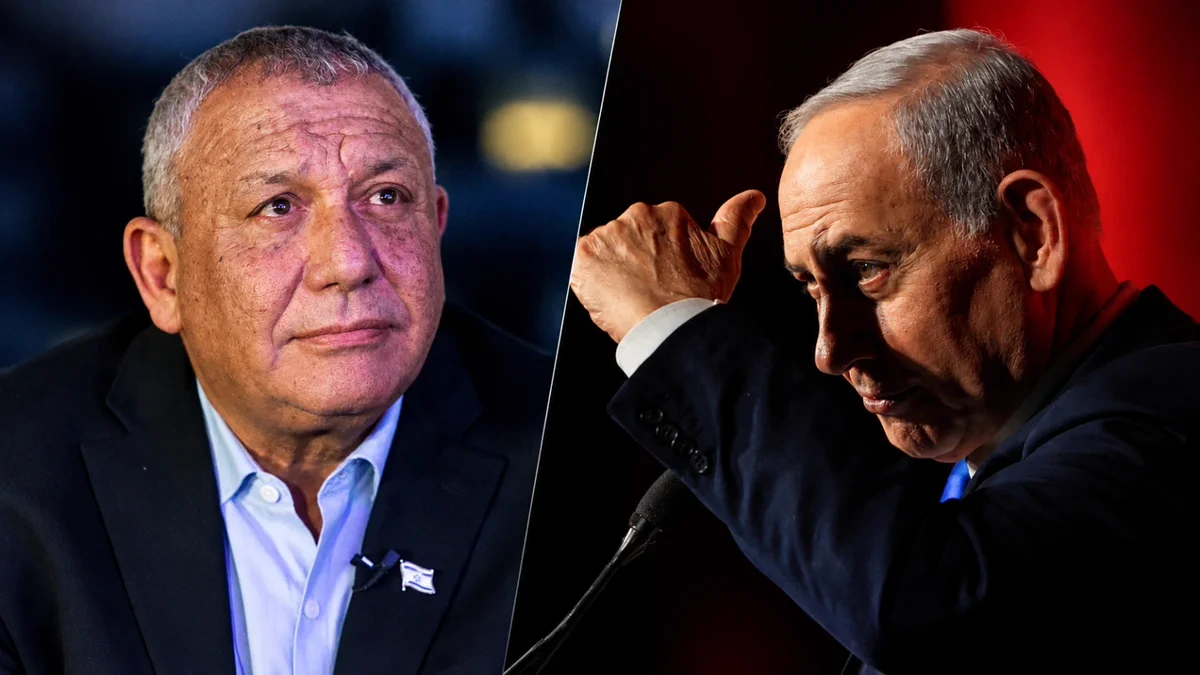
Israelis are waiting for final election results after a vote that produced no clear winner. Prime Minister Benjamin Netanyahu’s Likud party lost ground but remains the largest party. His rivals now face a hard choice: stay divided, or join forces with Arab-led parties to unseat him.
With 85% of votes counted, Likud had 20.8% and former military chief Gadi Eisenkot’s Yashar party had 16.1%. Arab-led parties won 14.9%. Local media projected 53 seats for Likud and its allies, 48 for Yashar and its allies, and 19 for Arab-led parties. Neither main bloc reaches the 61 seats needed for a majority in the 120-seat Knesset.
Turnout was nearly 78%, the highest since 1999. Likud’s share fell from 23.4% in 2022.
Counting Continues
Officials will count about half a million absentee ballots from military personnel and diplomats until Thursday evening. Official results must be certified by November 4.
Likud is likely to stay the largest party and to get the first chance to form a government. President Isaac Herzog does not have to pick its leader, though. “We must do everything we can, certainly after yesterday, to avoid another round of elections,” Herzog said.
The Arab Parties’ Historic Showing
The strong result for Arab-led parties has reopened a sensitive debate about identity. Arab citizens make up about 20% of Israel’s population. They are descendants of Palestinians who stayed after 1948. Many face discrimination and suspicion, which grew after the October 7, 2023 Hamas-led attack.
Netanyahu dismissed any partnership with them as treasonous. He warned against a “dangerous government.” Arab-led parties have ruled out working with him too.
Eisenkot has left the door open under conditions. They include recognition of Israel as a Jewish state and of Hamas as an extremist group. Some of his likely partners have rejected such an alliance, and it is unclear whether they will change their minds. Yair Golan of the Democrats party backs bringing Arab-led parties in. “We must no longer accept Netanyahu’s racist division between Jewish votes and Arab votes,” he said.
Mansour Abbas, leader of the United Arab List, which briefly joined a coalition in 2021, said: “We are here, we are not on the sidelines.”
What Voters Wanted
The vote reflected unease over Netanyahu’s alliance with the far right. It also reflected anger over military draft exemptions for ultra-Orthodox Jews. Far-right minister Itamar Ben-Gvir lost support. Yet opponents failed to push Netanyahu out decisively.
Supporters see Netanyahu as a guardian of Israel’s security and Jewish identity. Critics point to his ongoing corruption trial, his handling of the Gaza war, and pressure on the judiciary. Eisenkot’s backers see a capable leader with strong security credentials, whose son was killed in Gaza. His likely partners promise to improve Israel’s international standing and conscript ultra-Orthodox men.
What Happens Next
Coalition talks could last weeks. A minority government is possible but would need outside support to pass laws. If no one can build a majority, new elections could come early next year. Israel held five elections between April 2019 and November 2022 because of a similar stalemate. “After an election with such high voter turnout, it would be a mistake to hold another election,” Eisenkot said.
Voters in Tel Aviv were split. “I don’t see a possibility to form a government without the Arabs,” said Hanna Doukhan. Ran Cohen of Jerusalem said he wanted Netanyahu to build the coalition because “he’s the only one who knows how to do the job properly.”
Stay informed. Subscribe to the JournalTodays Newsletter for the latest Israel election news, Middle East coverage, and international affairs updates delivered straight to your inbox.