
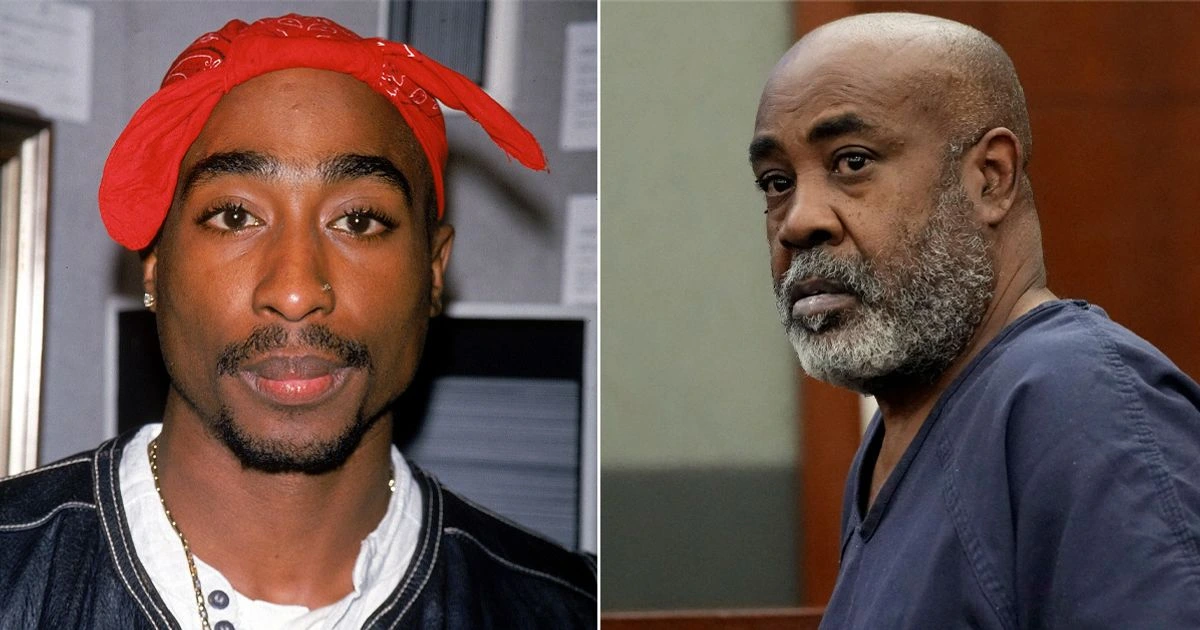
Nearly 30 years after Tupac Shakur was shot and killed in Las Vegas, the man prosecutors say ordered the murder is finally going on trial. Duane “Keffe D” Davis, 63, the former leader of the South Side Compton Crips, faces life in prison without parole if convicted. Proceedings begin Monday and are expected to last approximately one month.
The trial is unlikely to produce a definitive answer to who fired the shots. Everyone else in the white Cadillac that pulled alongside Shakur’s car in Las Vegas on the night of September 7, 1996, has since died. What prosecutors will argue instead is that Davis ordered the killing, provided the gun, and was sitting in the front seat of the vehicle when it happened — making him legally responsible regardless of who pulled the trigger.
Davis has pleaded not guilty. “I’m innocent. I ain’t killed nobody,” he said in a 2025 interview from prison. “They don’t have no evidence against me. They can’t even put me in Las Vegas.”
The Night of the Killing
Shakur, 25, had travelled to Las Vegas to attend a Mike Tyson boxing match at the MGM Grand on September 7, 1996. Death Row Records founder Marion “Suge” Knight, who was with Shakur, had ties to the Mob Piru gang — part of the broader Bloods alliance, which was a rival to the Crips. Bad Boy Records, the east coast label founded by Sean “Diddy” Combs, had employed Davis and the South Side Compton Crips as security.
After the Tyson fight, Knight and Shakur attacked Davis’s nephew, Crips member Orlando “Baby Lane” Anderson, in the casino lobby — retaliation for an alleged earlier assault on a Death Row employee. Prosecutors say Davis decided on revenge that same night. Later, a white Cadillac carrying Davis, Anderson, and others pulled up beside Shakur’s BMW. Shots were fired from the Cadillac. Shakur was hit multiple times and died six days later on September 13, 1996.
What Brought the Case to Trial — 27 Years Later
The killing went unsolved for decades because witnesses would not cooperate and physical evidence was sparse. The cold case was revived when Davis published his memoirs in 2019. In the book, Davis described being in the front seat of the Cadillac and handing a pistol to those in the back seat — revelations consistent with statements he had made previously to journalists. The memoirs were enough to revive the investigation, and Davis was arrested in September 2023.
Davis has since distanced himself from the book’s contents. He has claimed he never read the finished manuscript and that his co-author inflated the claims to drive sales. “I just gave him details of my life,” Davis said. “And he went and did his little investigation and wrote the book on his own.” His lawyers attempted to have the memoirs excluded from evidence, along with remarks Davis made to police in 2008 when he was interviewed as a witness. Both attempts failed.
The proceedings begin with jury selection, expected to take approximately one week.
The Broader Feud and Unresolved Questions
The trial revives one of the most notorious chapters in music history — the East Coast-West Coast hip-hop rivalry of the mid-1990s. Shakur, the son of a Black Panther activist, was raised in Harlem and Baltimore before becoming one of Los Angeles’s most significant cultural figures after signing with Death Row. He released landmark albums including All Eyez on Me and collaborated on “California Love.” His counterpart in the rivalry, Christopher “the Notorious B.I.G.” Wallace, was shot and killed in Los Angeles in March 1997 — a murder that also remains officially unsolved.
The trial will also touch on Combs. A recent television documentary featured Davis claiming in a police interview that Combs offered him $1 million to kill Shakur. Combs is currently incarcerated on separate charges. Shakur’s stepbrother Maurice Shakur filed a wrongful death lawsuit in civil court in May 2026, citing that “individuals who were involved in Tupac’s murder who, for 30 years, have not been held accountable for their crimes.”
Whatever the verdict in Davis’s trial, those closest to Shakur have said it is unlikely to fully satisfy their search for accountability.
Stay informed. Subscribe to the JournalTodays Newsletter for the latest crime news, music industry coverage, and current affairs updates delivered straight to your inbox.