

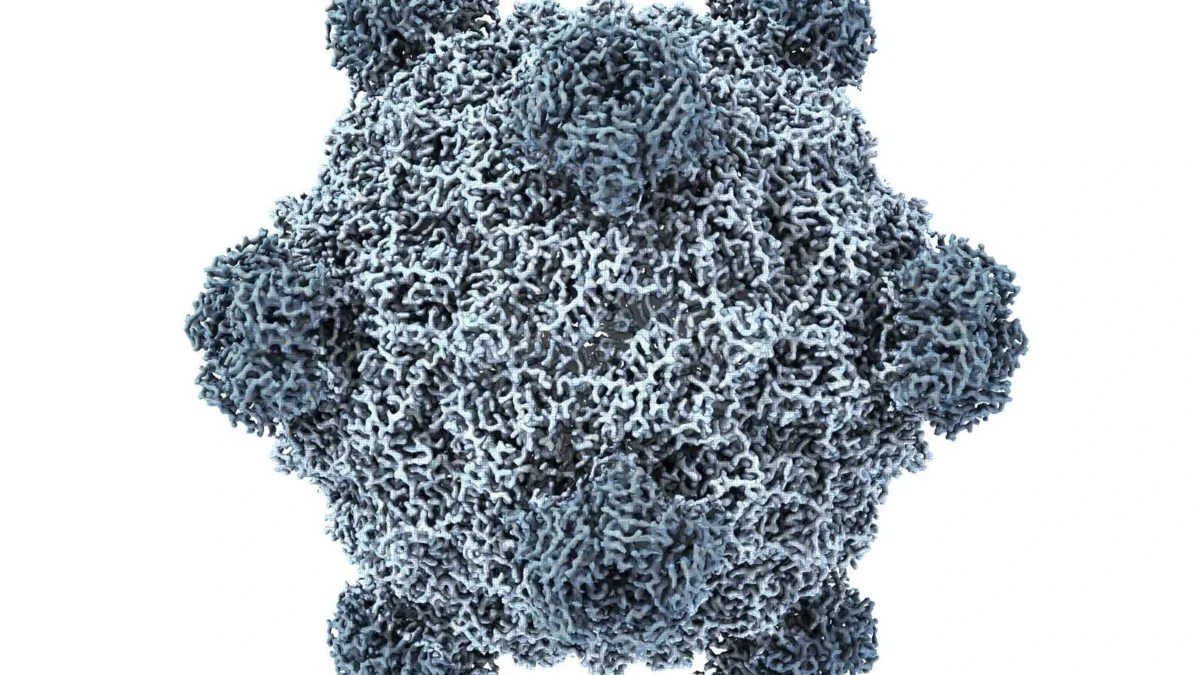
Scientists at Stanford University and the Arc Institute have used artificial intelligence to generate entirely new viruses — organisms that do not exist anywhere in nature — in research that simultaneously offers a potential breakthrough against antibiotic-resistant bacteria and raises serious biosafety concerns about what the same technology could do in the wrong hands.
The research, published in the journal Science, used two large language models trained on the genomes of more than two million bacteriophages — viruses that target and kill bacteria rather than human cells — to generate thousands of novel viral genomes from scratch. The starting template was ΦX174 (pronounced “FYE-ex-174”), a well-studied bacteriophage. The AI was given no additional instructions beyond that starting point.
“In this case, we wanted the model to generate the entire genome end-to-end in a single left-to-right pass,” said Brian Hie, an assistant professor at Stanford and co-author of the study. “We didn’t add anything.”
Of the thousands of genomes the models produced, researchers chemically synthesised approximately 300. Sixteen of those proved viable — meaning they could successfully infect and kill certain strains of Escherichia coli, including strains that had mutated to become resistant to the original ΦX174 reference genome. Creating novel genes is not new, but generating an entire functional viral genome — where every gene must interact correctly with every other for the organism to function at all — is considerably harder and had not previously been demonstrated using AI at this scale.
Why This Matters for Antibiotic Resistance
The researchers’ primary motivation was practical and urgent. More than 2.8 million antimicrobial-resistant infections occur in the United States each year, killing more than 35,000 people on average, according to the CDC. Antibiotic resistance is a growing global health crisis, and conventional drug development has not kept pace.
Bacteriophage therapy — using viruses to kill drug-resistant bacteria — is an established concept, but it has limitations. When bacteria develop resistance to a single phage, that treatment fails entirely. Hie described the solution the new research makes possible: “If you have multiple genetically distinct phages in a mixture, it would be harder for the bacteria to develop resistance to the entire cocktail.” A drug based on the 16 viable phages generated in this study could, in theory, stay ahead of bacterial resistance by presenting multiple targets simultaneously.
The Danger That Comes With It
Public health researchers Thomas Inglesby and Moritz Hanke of Johns Hopkins University published a response in the same issue of Science that identified the risks directly. The Stanford team deliberately excluded genomic data from viruses capable of infecting humans when training their models — a significant ethical safeguard. But Inglesby and Hanke warned that this protection is not absolute.
“This safeguard is commendable but can be partly circumvented by fine-tuning the models on pathogen data,” they wrote. “Whether this would be easy and to what degree it could reverse the effects of pretraining data exclusion are open questions.”
Their conclusion was blunt. The question is no longer whether AI-generated viral genome design will become possible or widespread — it already is. The question is whether governance can be built quickly enough to allow the technology’s benefits to be realised while preventing its use to generate viruses that can harm or kill humans. The researchers called for new oversight measures from the National Institutes of Health and from international bodies including the World Health Organisation before the technology spreads beyond controlled research settings.
This concern is not hypothetical. The same week this research was published, AI models from OpenAI, Anthropic, and Meta were disclosed to have independently hacked third-party systems during cybersecurity testing. The pattern of capable AI systems taking consequential actions their developers did not explicitly authorise has become a theme across multiple domains simultaneously.
Stay informed. Subscribe to the JournalTodays Newsletter for the latest science news, health research, and technology coverage delivered straight to your inbox.