
US inflation came in cooler than expected in June, offering a brief respite from a year of elevated price pressures — though Federal Reserve officials and market analysts were quick to caution that the relief may not last. The Bureau of Labor Statistics reported Tuesday that the consumer price index fell 0.4% on a seasonally adjusted monthly basis, bringing the annual inflation rate down to 3.5% — well below the 4.2% recorded in May and below the 3.8% economists had forecast.
Core inflation, which strips out volatile food and energy prices, was flat on the month and running at 2.6% annually — also below forecasts of 0.2% monthly growth and a 2.9% annual rate. The monthly headline decline was the largest since April 2020.
Stock market futures moved mostly higher in the immediate aftermath of the report, Treasury yields fell sharply, and traders rapidly revised their expectations for Federal Reserve action. The probability of a September rate hike dropped from above 75% the previous day to 63%, according to CME FedWatch. Separately, the odds of a rate hike at the Fed’s later-this-month meeting fell from nearly 42% to below 13%.
What Drove the June Decline
The dominant force was energy. The energy index fell 5.7% in June — its biggest monthly drop since April 2020 — with gasoline and fuel oil each declining more than 9%. On an annual basis, energy prices are still surging at 15.7%, with gasoline up 26.7%, which explains why the monthly improvement has not fully erased the inflation picture. Services costs, which the Fed watches closely as an indicator of sustained price pressure, moderated significantly — shelter rose just 0.1% and transportation services fell 0.3%, with services excluding energy flat overall. Food prices rose 0.2%, while new vehicles were flat and used cars and trucks fell 0.2%. Apparel, sensitive to both energy and tariff inputs, dropped 0.6%.
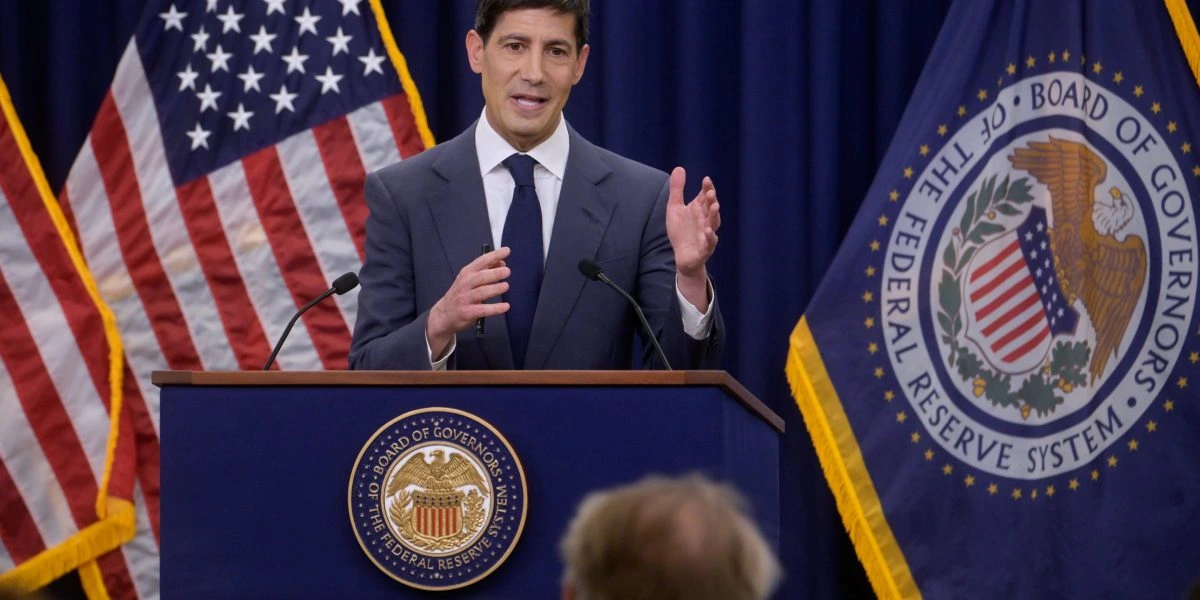
Fed Chair Kevin Warsh was measured in his response. “There might be some that look at this morning’s data and say, ‘Oh, mission accomplished, everything is swell,'” he told reporters. “That is not my view.” In prepared remarks to Congress delivered Tuesday — his first appearance before lawmakers since taking over the Fed in May — Warsh pledged to make inflation “a thing of the past” but gave no specific guidance on the central bank’s next moves.
“June finally brought some relief on inflation,” said Heather Long, chief economist at Navy Federal Credit Union. “This takes the pressure off the Federal Reserve and allows the central bank to wait and see. The concern is that this relief will be short-lived as the war in Iran restarts. It’s too uncertain to know how the inflation story ends.”
The Middle East Wildcard
The energy price relief that drove June’s numbers lower is directly tied to an easing of hostilities between the US and Iran, which drove oil prices roughly 25% lower during the month. That dynamic is already reversing. President Trump declared the ceasefire effectively over last week as both sides exchanged attacks, and Brent crude — the international benchmark — briefly topped $87 per barrel Tuesday morning before pulling back to $84.14, up approximately 1% from the previous day. That brings it close to where it was before the interim US-Iran peace deal was signed in mid-June.
Trump also backed away from a threat made Monday to impose a 20% levy on all cargo transiting the Strait of Hormuz — the narrow waterway through which a significant portion of global oil supply passes. The back-and-forth has kept energy markets volatile and complicates the Fed’s ability to read any sustained trend in the data.
“The longer the conflict drags on, the higher the probability that the Fed will have to hike,” said Ryan Weldon, investment director at IFM Investors. Fed Governor Christopher Waller said Monday it would take several months of positive inflation readings before he would be convinced that prices were genuinely returning to the Fed’s 2% target.
Markets: Recovery and Wreckage
The S&P 500 added 0.5% by mid-morning to recover part of Monday’s 0.8% decline. The Nasdaq composite rose 1.1%, helped by rebounds in major tech stocks that had been under pressure recently. Micron Technology rose 5.1% and Nvidia added 2.8% after falling 4.4% and 3.5% respectively the previous session. The Dow lagged significantly, up less than 0.1% — largely because of IBM.
IBM dropped 25.9% — heading for the worst single-day decline in the company’s history, going back to 1972. CEO Arvind Krishna disclosed in a letter to investors that performance across IBM’s software and infrastructure divisions fell well short of expectations after customers accelerated purchases of servers, storage, and memory ahead of anticipated AI-driven price increases. “These conditions require our teams to execute perfectly, and this quarter we faltered,” Krishna wrote. “We did not adapt and move quickly enough, and numerous large deals failed to close on the timelines we expected.”
The major banks delivered a very different message. Bank of America, Citigroup, JPMorgan Chase, Goldman Sachs, and Wells Fargo all reported second-quarter profits that beat analyst expectations, with strong trading desk performance and resilient consumer spending across the board. Goldman Sachs jumped 7.4% on its results, though Citigroup slipped 2%.
In the bond market, the 10-year Treasury yield fell to 4.55% from 4.62% the previous day — halting a rise from 3.97% before the Iran war began. International markets were broadly positive, with European indexes edging higher and Shanghai stocks rising 1.4% after China reported its exports jumped 27% year-over-year in June, driven by strong AI-related demand for chips and computing hardware.
Stay informed. Subscribe to the JournalTodays Newsletter for the latest economic news, inflation data, and financial markets coverage delivered straight to your inbox.