
SpaceX is officially a publicly traded company. The world’s most valuable aerospace business began trading on the Nasdaq on June 12th under the ticker SPCX after raising $75 billion at a valuation of $1.77 trillion — the largest IPO in history by a considerable margin, dwarfing Alibaba’s $22 billion offering in 2014. The IPO price was set at $135 per share across 555.5 million shares. And on the day trading began, SpaceX’s president was already floating the idea of a Tesla merger.
The scale of the offering is extraordinary — and so is the context. SpaceX lost approximately $4.9 billion in 2025 and another $4.3 billion in the first quarter of 2026 alone. The company is simultaneously running a rocket launch business that controls more than 80% of global payload capacity, a satellite internet network with over 10,000 Starlink satellites in orbit, and a recently absorbed AI operation that includes the Grok chatbot, the X social media platform, and a new chip manufacturing project called Terafab developed jointly with Tesla. There is, as one analyst put it, no historical benchmark to measure any of this against.
Why Your Retirement Fund Is About to Own SpaceX
The immediate impact for ordinary investors may come not from buying the stock directly, but from their existing index funds being required to purchase it. SpaceX has been fast-tracked for inclusion in the Nasdaq-100 and Russell 1000 indices — eligible to join the Russell 1000 just five trading days after its initial listing and the Nasdaq-100 as early as 15 trading days later. Any fund tracking those indices — including many 401(k) and IRA products — will have to buy SpaceX shares automatically.
Financial advisers are broadly reassuring about the scale of that impact. The key factor is free float — the number of shares actually available for public trading — rather than total market capitalisation. Preliminary analysis from FTSE Russell assumed a total market cap of $1.5 trillion but an available market cap of only around $70 billion, producing an estimated weight of just 0.11% in the Russell 1000. That is a small enough footprint that most diversified retirement portfolios should not feel meaningful disruption. Over time, as insider lockup restrictions expire and more shares enter the public market, that weighting could increase.
Some near-term volatility is expected as index funds acquire their required holdings. But advisers say that as long as your portfolio is diversified and SpaceX does not represent a substantial position, the exposure is manageable.
Should Individual Investors Buy SPCX?
The question dividing analysts is not whether SpaceX is an extraordinary business — it clearly is — but whether the $1.77 trillion valuation at IPO prices already accounts for all of that extraordinariness and then some.
Those who are bullish point to Elon Musk’s track record of delivering on ambitions that looked implausible — reusable rockets, global satellite internet, Tesla’s commercial dominance in electric vehicles. “The guy has a track record,” one financial adviser told reporters. “He’s the richest man in the world. He must know what he’s doing. Go along for the ride.” For investors with long time horizons and high tolerance for volatility, the upside potential is genuinely compelling.
Those who are more cautious note that newly public companies are historically volatile, that SpaceX’s combination of business lines — aerospace, social media, and artificial intelligence — has no comparable precedent, and that the current losses are real regardless of future ambitions.
The Tesla Merger Question
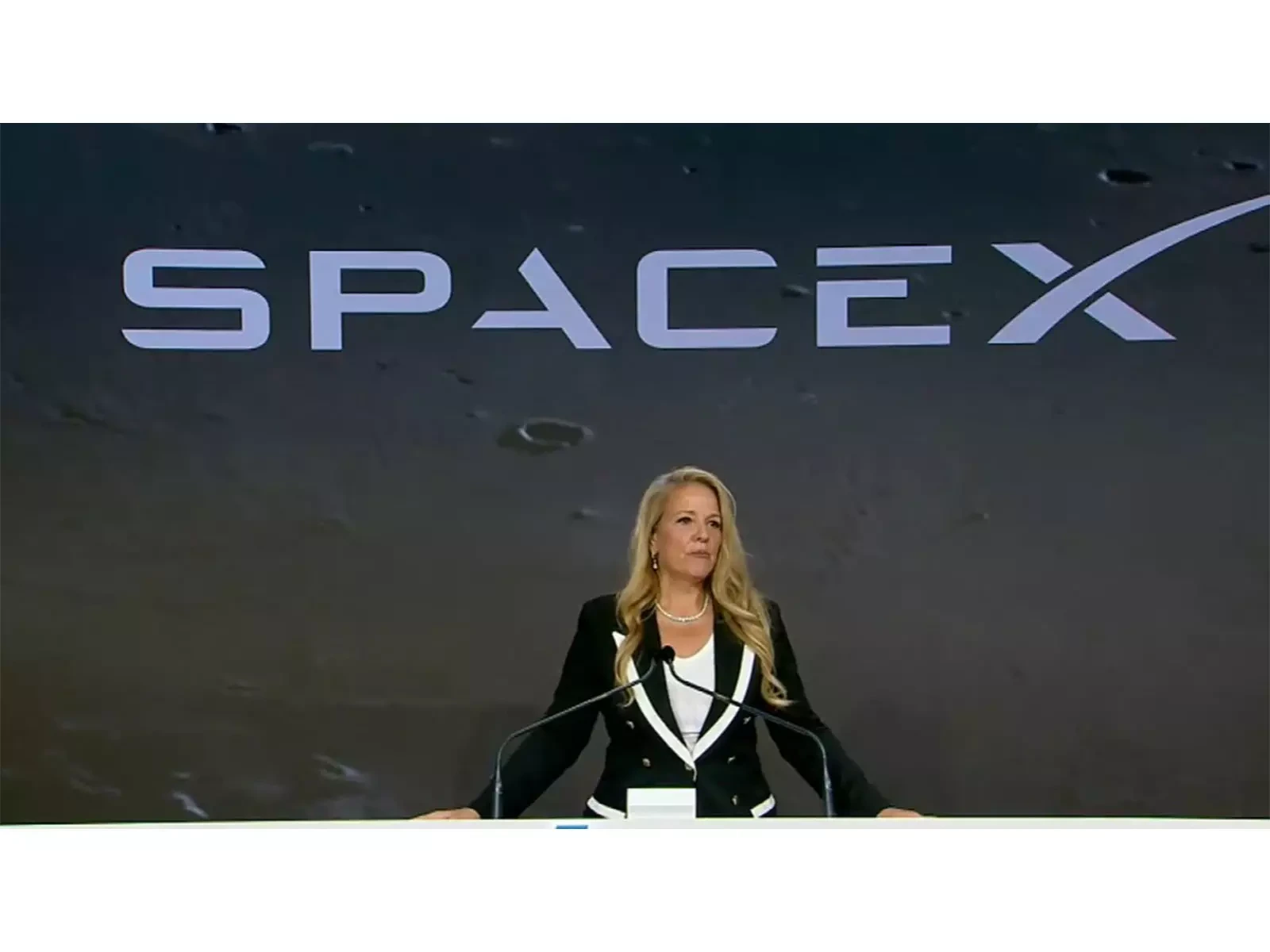
SpaceX President Gwynne Shotwell declined to rule out a future merger with Tesla on the day trading opened, telling reporters that the two Musk-led companies share overlapping goals and heading in the same direction. “There’s no question that there are synergies between Tesla and SpaceX in our futures,” she said. “There’s a convergence of what we’re all trying to accomplish.”
She added, with some humour, that a merger “might make Elon’s life a little easier” — while making clear her immediate focus is keeping rockets in production and maintaining Starlink’s broadband operations. The commercial ties between the companies are already deep. Tesla holds a stake in SpaceX. The two are jointly developing Terafab. SpaceX spent $131 million on Cybertrucks in 2025 and has purchased approximately $890 million worth of Tesla vehicles and batteries since 2023.
SpaceX’s amended IPO filing noted that the company may issue “significant equity” to finance future deals — language that merger-watchers interpreted as confirmation that acquisitions are on the roadmap. One Wedbush analyst put the odds of a Tesla-SpaceX merger closing in 2027 at between 80% and 90%, calling the potential combination the “holy grail” of Musk’s AI push. Oppenheimer analysts took the opposite view, arguing that maintaining independence between the two companies better serves Musk’s long-term goals — while acknowledging a future transaction remains “plausible.”
Under the terms of SpaceX’s IPO structure, Musk holds a supermajority of voting shares — more than 80% — and retains effective veto power over any board action including his own removal. Whatever happens next, it happens on his terms.
Stay informed. Subscribe to the JournalTodays Newsletter for the latest financial markets, investment news, and technology coverage delivered straight to your inbox.