
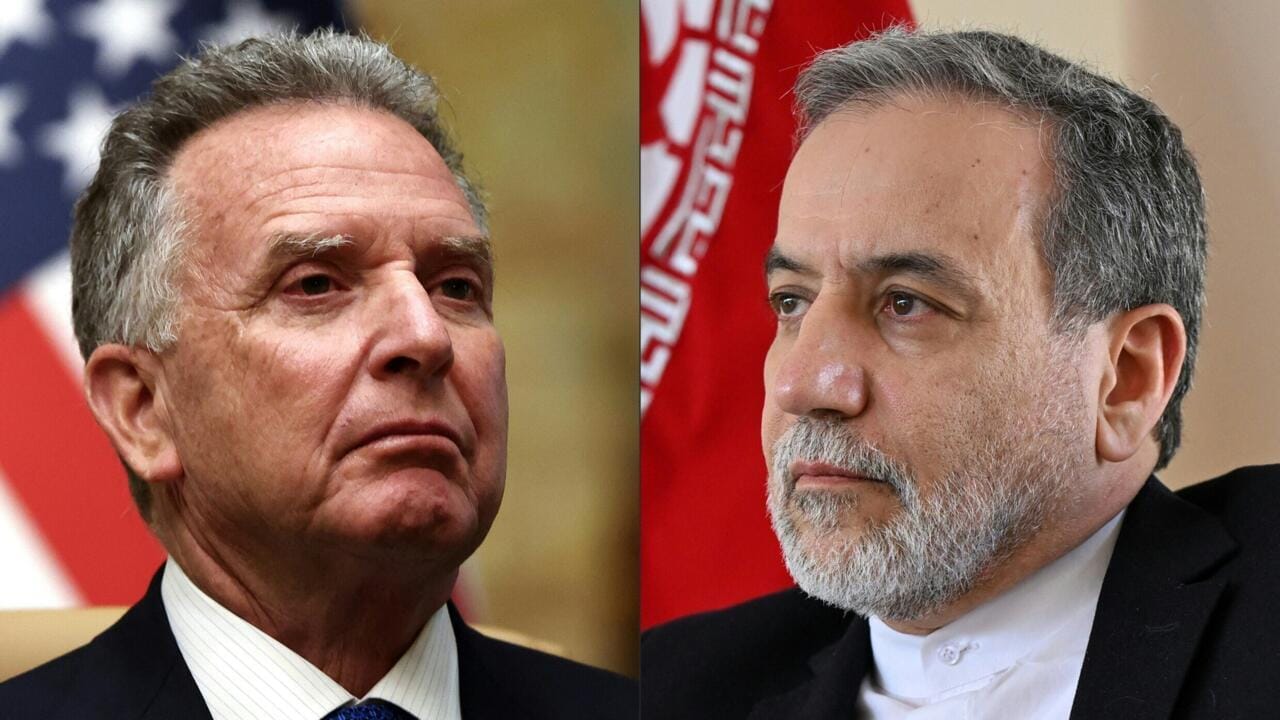
Iran has moved quickly to cool expectations of an imminent deal with the United States, even as both sides acknowledged meaningful progress in ongoing negotiations. Speaking at the weekly foreign ministry press briefing on Monday, Iran’s chief negotiating spokesperson said the two countries had reached conclusions on a large portion of issues — but that anyone claiming a formal agreement was around the corner was overstating the situation.
“It is correct to say that we have reached a conclusion on a large portion of the issues under discussion,” the spokesperson said. “But to say that this means the signing of an agreement is imminent — no one can make such a claim.”
Iran pointed to two factors complicating the final stretch: what it described as confusion and contradictory positions within Washington, and what it called Israeli interference designed to derail the process. The spokesperson accused Israel of trying to scupper the deal, adding that “nothing else should be expected of the Israelis.”
US Secretary of State Marco Rubio maintained a more optimistic tone, expressing hope that a deal could still be reached on Monday while acknowledging a growing list of unresolved issues. “Either we will have a good deal or we will deal with this issue in another way, and we prefer to have a good deal,” Rubio said. President Trump struck a harder line on Truth Social, writing that the deal would either be “great and meaningful, or there will be no deal at all.”
What Is Actually Being Negotiated — and What Is Still Blocked
The talks are centred on a memorandum of understanding intended to serve as a roadmap toward reopening nuclear negotiations, which Trump abandoned in February in favour of military action. The memorandum would require Iran to allow commercial shipping through the Strait of Hormuz — the narrow waterway that has been effectively closed since the war began in late February — in exchange for the US lifting its blockade of Iranian ports.
Iran has insisted that any memorandum must also include a ceasefire in Lebanon. That condition has not been met. On the nuclear question itself, Iran has made clear that no specific commitments on its stockpile of highly enriched uranium will be included in the memorandum — only a commitment to negotiate the issue within the following 60 days. Trump, facing significant pressure from critics inside the Republican Party, wants the memorandum to contain a firm commitment to dispose of that stockpile, even without specifying how.
Iran has previously indicated it would be willing to dilute its enriched uranium rather than transfer it to the US or Russia. It has also suggested it could suspend domestic enrichment for up to five years — well short of the 20-year suspension the US has sought.
The release of approximately $12 billion in frozen Iranian assets held in Qatar remains a central Iranian demand and a politically painful one for Trump, who repeatedly criticised Barack Obama‘s decision to release $1.7 billion to Iran in connection with the 2015 nuclear deal. Iran’s central bank governor travelled to Qatar on Monday, a signal the asset question remains very much alive in the negotiations.
The deal as currently structured contains nothing on Iran’s ballistic missile programme or its support for regional proxy groups — a significant gap given Trump’s earlier promise that the war would end with Iran’s complete surrender. Inside Iran, many commentators are already framing the emerging agreement not as an end to hostilities but as a roadmap toward a managed, hostile coexistence.
ALSO READ: Trump’s China Trip Produces Almost Nothing — and Global Markets Are Paying the Price for It
The Strait of Hormuz and the Language That Matters
One of the sharpest points of contention involves the Strait of Hormuz itself and who controls what passes through it. Iran’s spokesperson was careful on Monday to distinguish between “tolls” — a word he rejected — and “fees for navigational services,” which he argued were a reasonable charge if Iran and Oman were providing safety and environmental protection in the waterway. He confirmed that talks between Iranian and Omani officials took place on Monday to establish a reliable mechanism for safe passage.
European and Gulf states are unlikely to find that distinction convincing, particularly if commercial shipping is effectively required to engage Iran’s navigational services to pass through a strait that carries more than 20% of the world’s daily energy supply.
Trump used Monday to push a separate and ambitious regional initiative, posting on Truth Social that he had spoken with leaders of Qatar, Saudi Arabia, Pakistan, Egypt, Jordan, Turkey, the UAE, and Bahrain at the weekend, calling on those who had not yet done so to join the Abraham Accords and normalise relations with Israel. He suggested that if Iran signed its deal with the United States, he would welcome Iran into what he called an “unparalleled World Coalition.”
A former senior US diplomat with deep expertise in the region described the reception to Trump’s Abraham Accords proposal as “stunned silence” from regional leaders. She was direct: Turkey, Qatar, and Saudi Arabia would not be joining. “Absolutely not,” she said.
Inside Iran, there are signs that officials are beginning to prepare for some form of post-war normalisation. Reports emerged that Iran’s Supreme National Security Council had voted to reconnect the country to the international internet within a week — a significant move given how tightly authorities have controlled information flows during the conflict. Iranian officials are nervous about public reaction once internet restrictions are lifted, with food inflation soaring and economic pressure mounting. A wave of executions inside the country continues.
Whether a deal emerges this week or collapses under the weight of unresolved demands, the window for diplomacy appears to be narrowing on both sides.
Stay informed. Subscribe to the JournalTodays Newsletter for the latest geopolitical news, Iran nuclear talks coverage, and global affairs delivered straight to your inbox.