
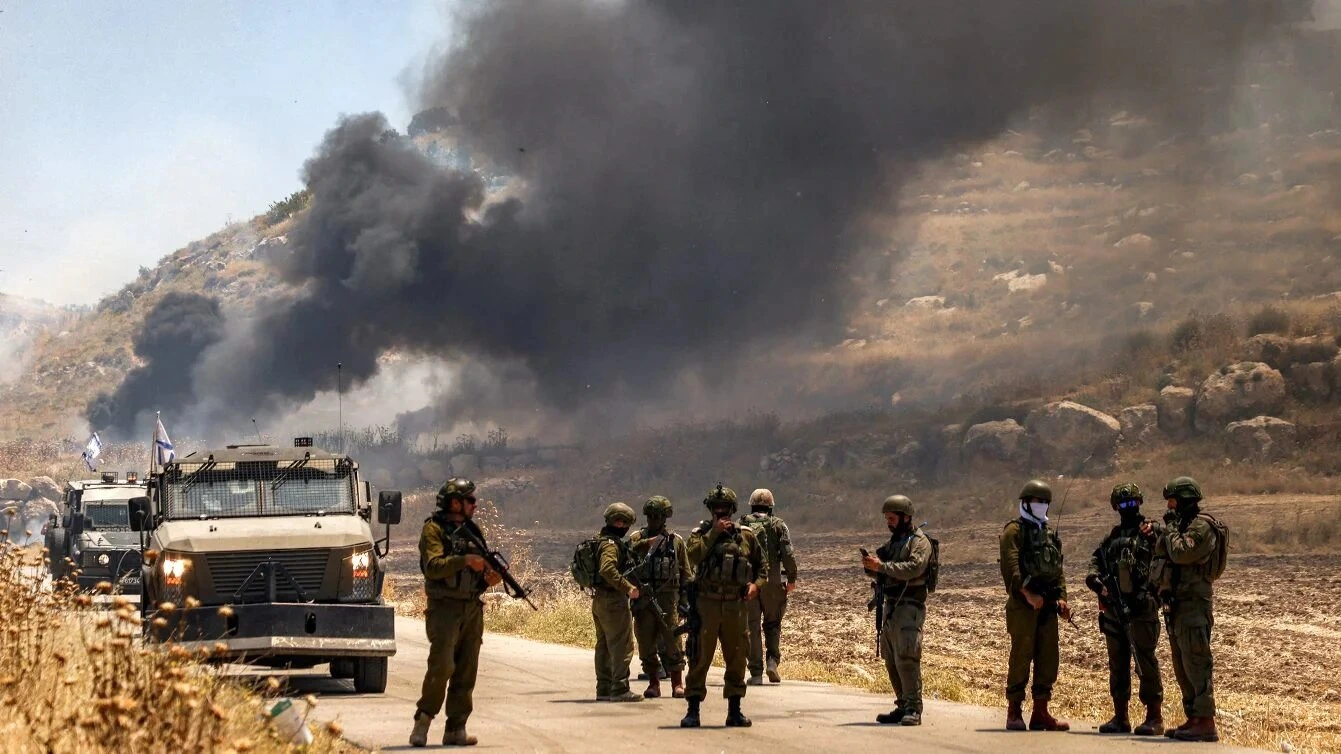
A fragile ceasefire between Israel and Lebanon is under severe strain after an Israeli strike in southern Lebanon killed three Lebanese soldiers on Saturday, including a brigadier general — the most senior Lebanese military officer killed since violence erupted between Israel and Hezbollah in March. The strike targeted a military vehicle near the city of Nabatieh and occurred just days after the latest in a series of US-brokered ceasefire agreements was announced.
The Lebanese military condemned what it described as “continued, deliberate and repeated” Israeli attacks inside the country and said the vehicle struck was carrying military personnel. The Israeli military acknowledged the strike and said the vehicle had been moving “suspiciously” toward Israeli troops, that it had received “concrete indications” Hezbollah planned to fire on soldiers in the area, and that the incident was under review.
Lebanese President Joseph Aoun — himself a former army general — condemned the strike as a “flagrant violation” of international law and called on the international community to put an end to the repeated attacks. The Lebanese army is not a party to the conflict between Israel and Hezbollah and has not been involved in the fighting.
Why This Strike Threatens the Broader Peace Effort
The killing of Lebanese soldiers creates a politically explosive problem for the Trump administration’s ceasefire efforts, and for the Israeli government’s stated position on the conflict. Israeli officials have repeatedly insisted that the war is exclusively with Hezbollah — the Iran-backed militia that dominates much of southern Lebanon — and not with the Lebanese state. Both the Israeli military and the Lebanese military receive US backing and funding. Direct talks between their officials have been taking place in Washington.
The Lebanese army is significantly outnumbered by Hezbollah in much of southern Lebanon, where the group has exercised de facto authority for decades. Since Israel invaded Lebanon in March and occupied parts of the country after Hezbollah began firing rockets into northern Israel in response to the US-Israeli attack on Iran, Lebanese soldiers have repeatedly found themselves caught in the crossfire.
Independent conflict tracking data shows that before Saturday’s strike, Israeli forces had already hit Lebanese security forces at least 21 times since the start of the conflict, killing 30 personnel and wounding 17 others. That pattern, researchers note, is “inconsistent” with Israel’s stated position that it is not targeting the Lebanese state — and it makes the Lebanese government’s effort to assert control over southern Lebanon and eventually disarm Hezbollah significantly harder to pursue.
ALSO READ: Trump Picks Housing Official Bill Pulte as Acting Intelligence Chief
The Ceasefire That Has Not Stopped the Fighting
The latest US-brokered agreement was intended to halt an escalating Israeli offensive against Hezbollah that had intensified over the past week. It has not worked. Israeli strikes have continued across Lebanon since the agreement was announced, and Hezbollah has maintained its attacks on Israeli troops in the south. Hezbollah leader Naim Qassem rejected the Lebanese-Israeli agreement as tantamount to surrender, arguing that it required his organisation to unilaterally cease attacks without any immediate concessions from Israel.
It is the latest in a series of ceasefires that have failed to hold. For the Trump administration, which brokered the agreement and has been pushing hard to stabilise the broader regional situation — including delicate negotiations with Iran over the Strait of Hormuz — Saturday’s killings represent a significant setback. Roughly three dozen members of Lebanon’s security forces have been killed in the conflict overall, according to independent conflict monitoring data.
The longer this pattern continues, the more difficult it becomes for the Lebanese government to position itself as a credible partner in any peace process — and the harder it becomes to construct the political conditions under which Hezbollah might eventually be pressured to stand down.
Stay informed. Subscribe to the JournalTodays Newsletter for the latest Middle East news, conflict updates, and global affairs coverage delivered straight to your inbox.