
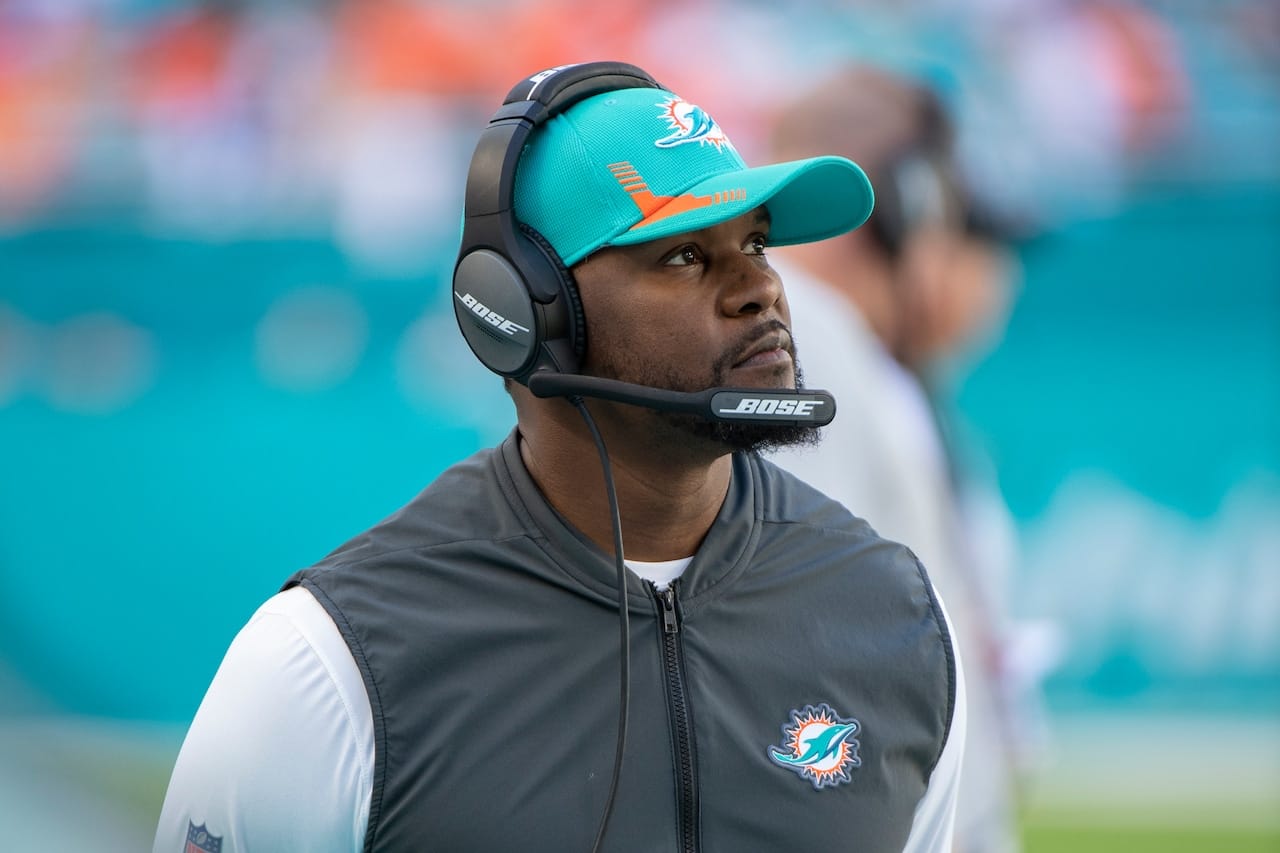
Brian Flores will have his day in federal court. The United States Supreme Court declined on Tuesday to hear the NFL’s appeal seeking to force the former Miami Dolphins head coach’s racial discrimination claims into private arbitration — a process that would have been overseen by NFL Commissioner Roger Goodell himself. The decision clears the path for one of the most significant civil rights cases in American sports history to proceed before an independent judge.
The Supreme Court’s refusal to intervene upholds a 2025 ruling by the New York-based 2nd US Circuit Court of Appeals, which found that compelling Flores to arbitrate his claims through a process controlled by the NFL’s own commissioner was “plainly unenforceable.” The appeals court put it plainly — an arbitration agreement that hands authority over a dispute to “the principal executive officer of one of their adverse parties, is an agreement for arbitration in name only.”
Flores’s attorney welcomed the ruling without hesitation. “The NFL must now accept that its commissioner cannot be the arbitrator over discrimination claims against the league and its teams,” he said. “We look forward to litigating these claims in court.” The NFL said it respected the decision and was “fully prepared to defend” itself as the case moves forward.
What Flores Is Alleging — and Why It Matters
Flores filed his original lawsuit in 2022, shortly after the Miami Dolphins fired him despite the team posting winning records in two consecutive seasons. The suit alleges that the NFL and several of its teams engaged in systematic discrimination against Black candidates for head coaching and senior management positions, in violation of both federal and state law.
Among the most striking allegations are claims that Flores was asked by the New York Giants and Denver Broncos to participate in “sham interviews” — meetings designed not to genuinely evaluate him for coaching positions, but to satisfy the NFL’s own Rooney Rule. Introduced in 2003 in response to the historically low number of Black head coaches in the league, the Rooney Rule requires teams to interview minority candidates before making coaching hires. Flores alleges that in practice, those interviews were conducted after hiring decisions had already been made, rendering the policy meaningless.
ALSO READ: New York City Is Offering $50 World Cup Tickets to Residents — Here Is How to Enter the Lottery
Two additional plaintiffs joined the case after the initial filing — former Arizona Cardinals head coach Steve Wilks and veteran NFL assistant Ray Horton — both of whom brought their own claims of systematic racial bias in hiring and termination decisions. The teams named in Tuesday’s Supreme Court appeal were the New York Giants, Denver Broncos, and Houston Texans.
The lawsuit seeks more than financial compensation. It asks the court to compel the NFL to make structural changes to how it hires and retains Black coaches and general managers, to create incentives for teams to prioritise diverse hiring, and to require teams to document and explain hiring and firing decisions in writing — a level of accountability the league does not currently mandate.
A Long Road to Get Here
The case has wound through the court system for three years. A New York federal judge ruled in 2023 that Flores’s claims of systematic discrimination had sufficient legal merit to proceed in federal court, while sending other aspects of the case to private arbitration. The NFL appealed. The 2nd Circuit upheld the federal court track in 2025. The NFL appealed again to the Supreme Court. On Tuesday, the Supreme Court declined to intervene — effectively closing the NFL’s avenue of escape from a public trial.
The NFL has denied all claims of racial discrimination throughout the proceedings. But with the arbitration option now exhausted, the league faces the prospect of having its hiring practices examined in open court — with documents, testimony, and evidence made part of the public record.
Flores, 45, is currently serving as defensive coordinator for the Minnesota Vikings. The case he filed three years ago, at significant professional risk, has now reached the point where the most powerful sports league in the United States will have to answer for its hiring record in a federal courtroom.
Stay informed. Subscribe to the JournalTodays Newsletter for the latest sports law, NFL news, and US current affairs delivered straight to your inbox.