
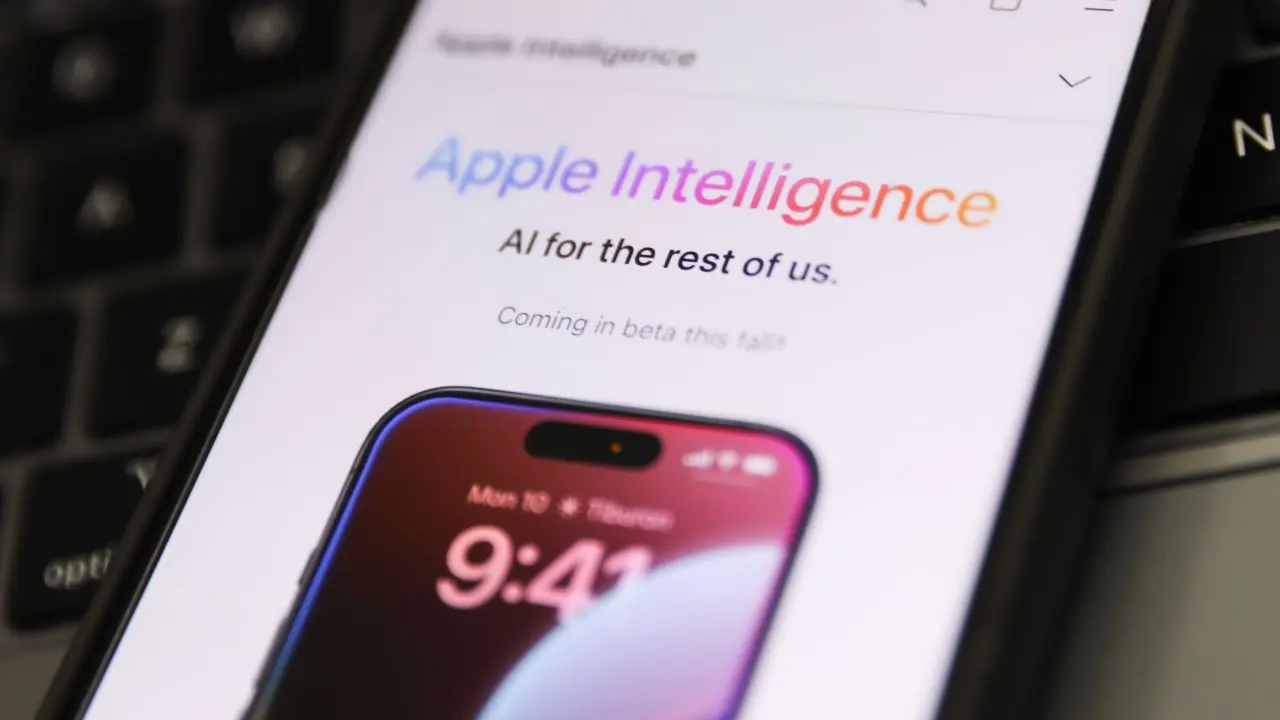
Apple has just made its most significant accessibility announcement in years. The company previewed a sweeping suite of updates powered by Apple Intelligence that will transform how millions of people with disabilities use their devices — covering vision, hearing, mobility, and reading — with all features arriving later this year.
“Apple’s approach to accessibility is unlike any other,” said CEO Tim Cook. “Now, with Apple Intelligence, we are bringing powerful new capabilities into our accessibility features while maintaining our foundational commitment to privacy by design.” Every new feature processes data on-device, meaning nothing leaves the user’s phone, tablet, or headset to reach a server.
Smarter Tools for Users Who Are Blind, Deaf or Have Limited Mobility
VoiceOver — Apple’s screen reader for users who are blind or have low vision — gets a significant upgrade through a new Image Explorer function. It uses Apple Intelligence to deliver detailed descriptions of photographs, scanned bills, personal records, and other visual content across the entire operating system. Users can also press the Action button on iPhone to ask spoken questions about whatever is in their camera viewfinder and receive detailed answers in real time, with follow-up questions supported in natural language.
Magnifier, designed for users with low vision, receives the same treatment through a high-contrast interface — with spoken commands like “zoom in” or “turn on flashlight” now controlling the app directly. Voice Control, meanwhile, becomes meaningfully more intuitive for users with physical disabilities who navigate iPhone and iPad entirely by voice. Rather than memorising exact button labels or numbers, users can now describe what they see on screen in natural language — saying things like “tap the guide about best restaurants” or “tap the purple folder” — and the device responds accordingly.
ALSO READ: Apple’s Manufacturing Academy Is Quietly Transforming How America Builds Things
Accessibility Reader, Apple’s customised reading experience for users with dyslexia, low vision, and other reading-related disabilities, gains the ability to handle complex source material including scientific articles with multiple columns, images, and tables. On-demand summaries let users get an overview before reading in full, and new built-in translation allows content to appear in the user’s native language without losing custom formatting, font, or colour settings.
For users who are deaf or hard of hearing, Apple is introducing generated subtitles for uncaptioned video content — covering personal videos, clips received from friends and family, and streamed media. The subtitles are generated entirely on-device using speech recognition and appear automatically across iPhone, iPad, Mac, Apple TV, and Apple Vision Pro without requiring captions to already be present.
The most striking announcement is a new feature for Apple Vision Pro that allows users to control compatible power wheelchairs using only their eyes. For people with conditions such as ALS who cannot use a joystick, eye-based control offers a meaningful path to independent movement. The feature launches with Tolt and LUCI alternative drive systems in the United States, supporting both Bluetooth and wired connections, with Apple committed to expanding compatibility to additional wheelchair systems over time.
Pat Dolan, founder of GeoALS and a member of Team Gleason’s patient advisory board, has lived with ALS for ten years. “The option to control my power wheelchair on my own is gold to me,” he said. “With this new feature, Apple is developing life-enhancing technology for the people who need it most.”
Beyond the major headline features, the update package includes Vehicle Motion Cues coming to visionOS to reduce motion sickness for Vision Pro users travelling as passengers, face gesture support for performing taps and system actions on Vision Pro, Name Recognition expanding to more than 50 languages globally, larger text support for tvOS, improved pairing for Made for iPhone hearing aids, and Sony Access controller support for iOS, iPadOS, and macOS gaming.
Starting today, the Hikawa Grip and Stand for iPhone — an adaptive MagSafe accessory designed in collaboration with individuals across a wide range of disabilities — is available in three new colours on the Apple Store online. The accessory was developed by Los Angeles-based designer Bailey Hikawa and is now available globally for the first time through a collaboration with PopSockets.
Stay informed. Subscribe to the JournalTodays Newsletter for the latest Apple news, technology updates, and innovation coverage delivered straight to your inbox.