
A 20-year-old who spent more than a decade without an explanation for her worsening symptoms finally has an answer — and an AI model helped find it. New research from Boston Children’s Hospital and OpenAI shows that an off-the-shelf AI tool helped identify the genetic cause behind 18 previously unsolved paediatric rare disease cases, offering families answers that years of conventional analysis had failed to produce.
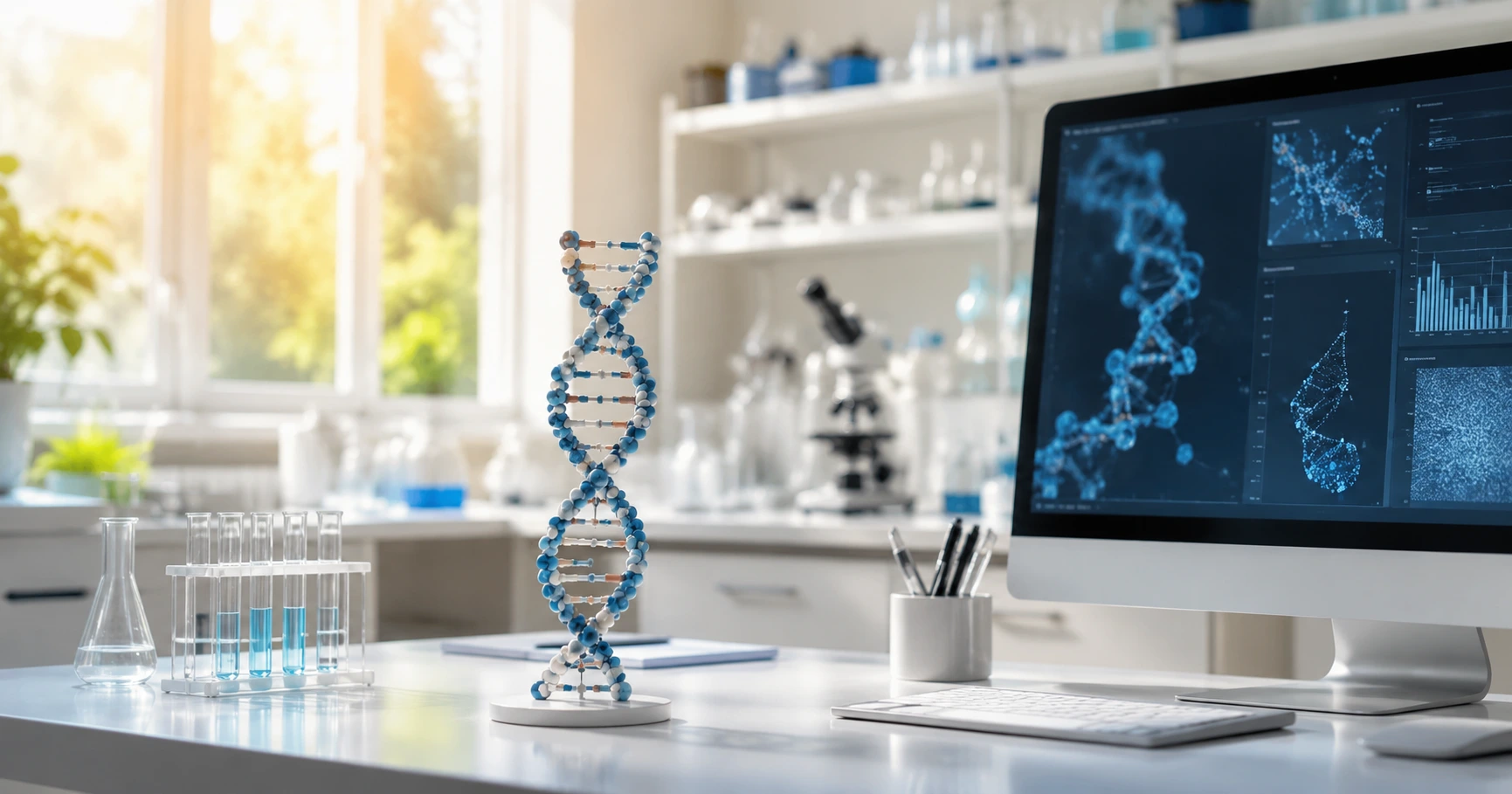
The findings, published in NEJM AI, the artificial intelligence-focused publication of the New England Journal of Medicine, describe how OpenAI’s o3 Deep Research model helped clarify diagnoses across 376 patient genomes that had previously defied explanation. “It’s a total game changer,” said Catherine Brownstein, scientific director of the genetic investigations arm of the Manton Center for Orphan Disease Research at Boston Children’s Hospital and one of the study’s lead researchers.
The Manton Center works with more than 3,500 individuals globally affected by rare diseases, regularly screening patient genomes against newly identified genes that might finally provide answers. Those screenings frequently come up empty — not because the data isn’t there, but because the human genome contains roughly 20,000 protein-coding genes, and identifying clear cause-and-effect relationships within that complexity is extraordinarily labour-intensive. “A researcher can only spend so much time on a single case,” said Suyash Shringarpure, a technical researcher at OpenAI focused on health applications. “Maybe a case remained unsolved when it came to them first, but a year later a paper was published that clarifies the link between the gene and the disease.”
How the Research Worked
Brownstein and her team ran the genomes of 376 undiagnosed patients through the o3 model — the most powerful system available at the time of the research last year. For each case, researchers provided clinical notes, symptom descriptions, and a filtered list of candidate genes. Every output the model generated was reviewed by the human research team before any diagnosis was finalised.
Across four disease categories, the team identified new diagnoses for 10 patients with rare neurodevelopmental conditions, four with neuromuscular disorders, two children who had died suddenly without prior explanation, and two patients with early childhood psychosis. “It got almost 5% new diagnoses, which doesn’t sound like a lot,” Brownstein acknowledged, “but considering how many times these had already been analyzed, that’s a huge number, and each one means an answer for a family.”
ALSO READ: GLP-1 Weight Loss Drugs Like Ozempic May Improve Testosterone and Sperm Quality in Men, Study Finds
A Diagnosis 15 Years in the Making
Kyra Benton was nine years old when her mother first noticed she was walking differently — on her tiptoes, struggling to run normally. A neuromuscular specialist in New York City had no answers. Years of worsening health followed, including severe heart problems and a tracheotomy at age 13. Even Boston Children’s Hospital, after extensive analysis, could not identify the cause.
Benton had largely made peace with never knowing. Then, roughly a week before her 20th birthday last summer, a researcher from the Manton Center called. “She said, ‘Hi, we know it’s been about 15 years, but we have some news for you,’ and it kind of just blossomed from there,” Benton said. The diagnosis: myofibrillar myopathy, a progressive genetic neuromuscular disorder that causes muscle fibres to break down.
Brownstein said she was genuinely surprised that a commercial AI system could surface a diagnosis in genomic data that had already been analysed multiple times by human specialists. “There’s pages upon pages of these genes that I have to get through for a case, while the LLM doesn’t get tired,” she said, pointing to a fundamental bottleneck in the field — there are simply not enough trained geneticists to manually search every genome for the rare combination of factors causing a patient’s symptoms.
What Outside Experts Say — and What the Limitations Are
Adam Rodman, a physician and AI-in-medicine expert at Beth Israel Deaconess Medical Center who was not involved in the research, called the findings significant. “A diagnostic yield of 5% is truly meaningful and could serve as a significant screening tool to help speed up the reanalysis of significant backlogs of cases,” he said.
Chunhua Weng, a bioinformatics professor at Columbia University who also was not involved in the study, described the paper as a “wonderful” contribution to the field — while echoing the research team’s own caution that AI outputs require rigorous human verification before being treated as clinical fact. “The appropriate use of LLMs in diagnosis requires careful attention to trustworthiness,” Weng said.
Notably, seven of the new diagnoses identified in the study were technically “rediscoveries” — cases where a treatment team somewhere else in the world had already identified the correct diagnosis but had not shared that finding with the broader research community. Brownstein said even those rediscoveries carry real value, since identifying which patients have a specific rare condition means they can be prioritised quickly when new treatments eventually become available.
OpenAI provided financial support for the research and was direct about both the promise and the limits of what the findings represent. “We definitely don’t want to overhype this,” said Ashley Alexander, head of health at OpenAI. “But I also want to make sure that people don’t miss what’s happening and what’s possible with even just the version of ChatGPT that’s in their pocket today.” The research team emphasised that a diagnosis is only the first step toward treatment, and that large language models are not intended for consumers to self-diagnose or self-treat conditions.
For Benton, the outcome carried a particular irony. “Quite frankly, I’m the type of person that’s not all that much in favour of AI,” she said — though she acknowledged its value in cases like hers, where “it can lead to massive breakthroughs that can really change people’s lives for the better.”
This article discusses serious illness and medical diagnosis. If you or a family member are navigating an undiagnosed condition, please speak with a qualified healthcare provider or genetic counsellor about the options available to you.
Stay informed. Subscribe to the JournalTodays Newsletter for the latest health, medical research, and AI news delivered straight to your inbox.