

Measles cases in the United States have hit their highest level in 35 years, with 2,295 infections reported nationwide so far in 2026 — surpassing the 2,286 cases recorded across the whole of 2025 and marking the worst annual total since 1991, according to data released by Johns Hopkins University. The resurgence represents a dramatic reversal for a disease the United States declared eliminated in 2000.
Health experts are pointing to a consistent underlying cause: declining vaccination rates that have left communities across the country more vulnerable than they have been in decades. The milestone comes as Delaware announced a new outbreak in Kent County involving four unvaccinated adult men — a reminder that the disease is no longer limited to the child populations it once primarily affected.
“In communities with pockets of susceptible individuals across a broad age range, measles has been able to take hold, infecting those who are susceptible and spreading rapidly,” said William Moss, executive director of the International Vaccine Access Center at Johns Hopkins.
What Is Driving the Surge
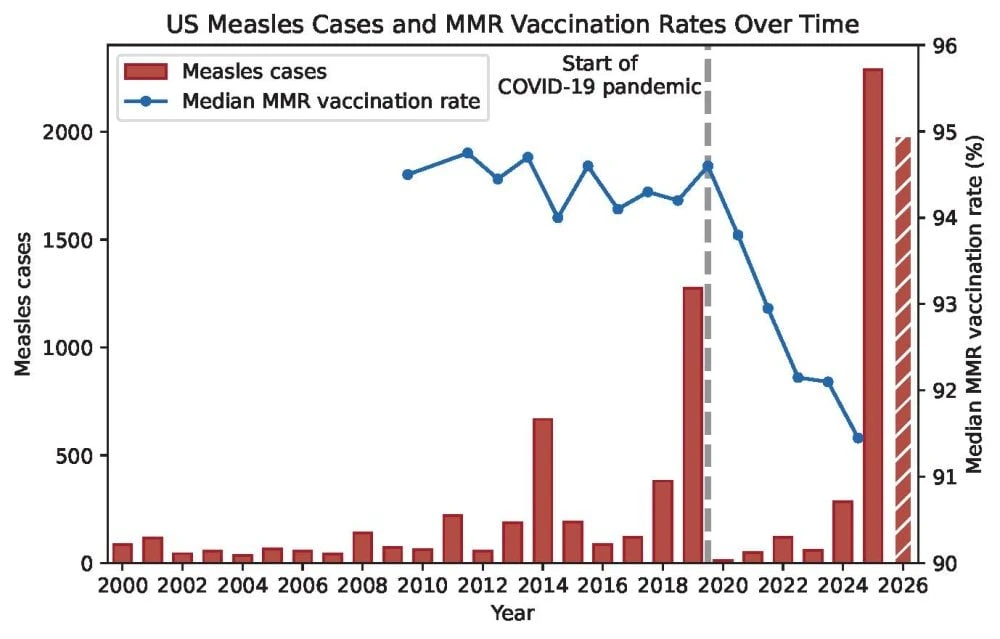
Vaccination coverage among US kindergartners has declined from 95.2% in the 2019-20 school year to 92.5% in 2024-25, according to the CDC — well below the 95% threshold required for effective herd immunity. When herd immunity breaks down, even people who cannot be vaccinated themselves lose the protection that comes from being surrounded by immune individuals.
The resurgence has been building since early 2025, when a large outbreak centred in Gaines County, Texas, involving an under-vaccinated Mennonite community helped spread the virus into wider circulation. That outbreak was the largest in several years, and the disease has not retreated since.
The growing anti-vaccine movement has been a significant factor. The confirmation of vaccine sceptic Robert F. Kennedy Jr. as health secretary amplified concerns about immunisation safety, with Kennedy making anti-vaccine comments and downplaying deaths of children related to measles during the height of the Texas outbreak. He also promoted vitamin A as a preventive measure — a claim without scientific basis. Kennedy later reversed course during the Texas outbreak, encouraging vaccination, but the damage to public confidence in immunisation had already been done in some communities.
What Measles Is and Why It Spreads So Easily
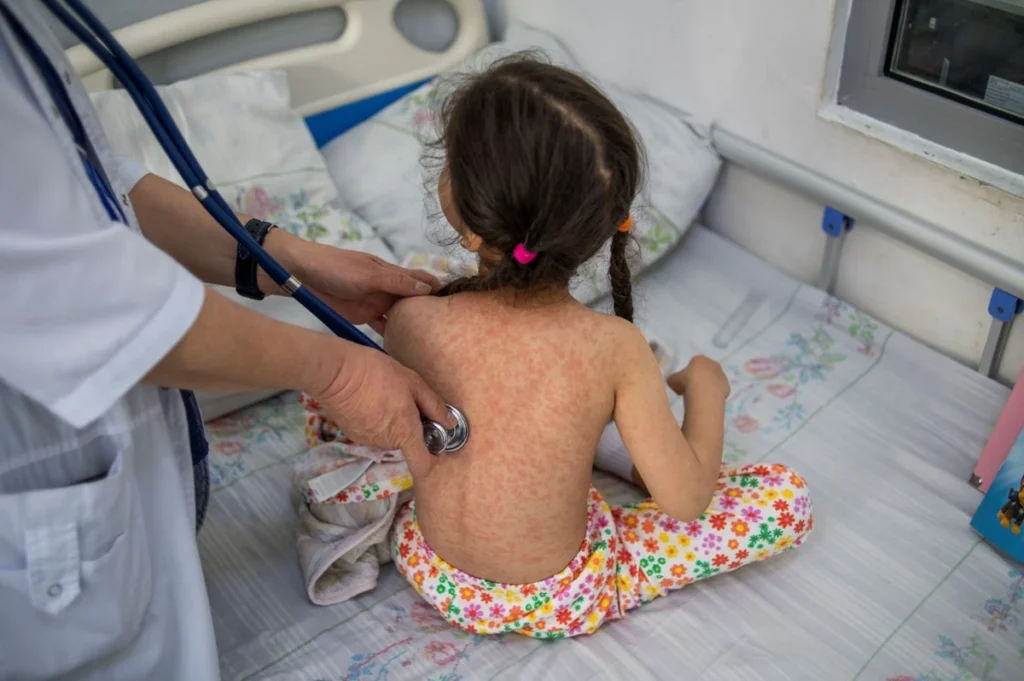
Measles is a highly contagious viral disease caused by a pathogen that infects the respiratory tract before spreading through the body. Symptoms — high fever, cough, runny nose, watery eyes, and a spreading rash — typically appear seven to 14 days after exposure. It is among the most contagious infectious diseases known: approximately 90% of unvaccinated people exposed to the virus will contract it. One in five of those people will require hospitalisation, according to the CDC.
The MMR vaccine — protecting against measles, mumps, and rubella — is 97% effective and is part of the standard childhood vaccine schedule in the United States, with the first dose administered between 12 and 15 months and the second between ages four and six. The US declared the disease eliminated in 2000, when only 86 cases were recorded nationally.
The path back to that milestone will require a reversal of the vaccination trends that have quietly been eroding community protection for the past six years.
If you have concerns about measles symptoms or vaccination, please consult a healthcare provider. The MMR vaccine is available through your doctor, paediatrician, or local health department.
Stay informed. Subscribe to the JournalTodays Newsletter for the latest health news, disease outbreaks, and public health coverage delivered straight to your inbox.