
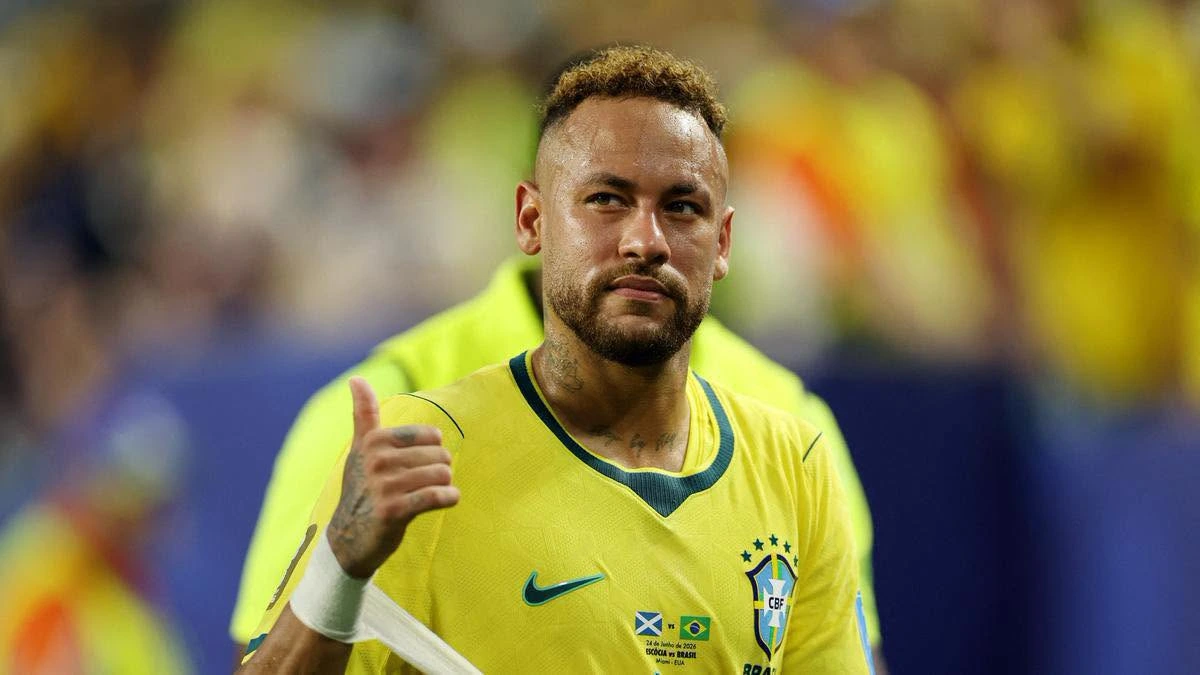
Neymar’s international career is over. The 34-year-old announced his retirement from the Brazilian national team moments after the final whistle of Brazil’s 2-1 defeat to Norway in the World Cup Round of 16 — a result that ended the five-time world champions’ tournament campaign at the first knockout stage. It was not the farewell anyone would have written for him, but then very little about Neymar’s international career was straightforward.
Brazil had arrived at MetLife Stadium in New Jersey with genuine belief. They left stunned, beaten by a late Erling Haaland brace that turned a nervous match into a decisive knockout. Neymar’s stoppage-time penalty made it 2-1 and briefly offered false hope, but Norway held on. When the final whistle sounded, Neymar stood motionless before emotion took over. Tears replaced words as teammates gathered around the man who had carried the weight of Brazilian football for more than a decade.
“I tried and tried, but now it’s over,” he said after the game. “I started here and I ended here.”
A Career That Rewrote Brazil’s Record Books
Neymar made his senior international debut in 2010 at 18 years old and departs 16 years later as Brazil’s all-time leading men’s goalscorer — 80 goals in 129 appearances, a record that will stand as a monument to a player who gave almost everything to the national team even when his body repeatedly refused to cooperate.
Across four World Cups, he became the face of the Selecao. He could not bring them the one trophy the nation craved more than any other, but the moments he produced along the way were often extraordinary. He won the FIFA Confederations Cup in 2013. He captained Brazil to Olympic gold on home soil at Rio 2016 — a moment of catharsis for a country still raw from the 7-1 humiliation against Germany at the 2014 World Cup — having previously won silver at the London Games in 2012.
Injuries defined too many of the pivotal moments. Major tournaments repeatedly arrived to find him in various stages of recovery — a fractured vertebra in 2014, persistent ankle issues across the following years, the hamstring and groin problems that truncated his involvement in subsequent cycles. Those interruptions left legitimate questions about what a fully fit Neymar might have achieved across four World Cups, but they are questions that will never have satisfying answers.
How the Final Chapter Played Out
Neymar arrived in the United States for this World Cup already carrying an injury, missing Brazil’s opening group stage matches entirely. He worked his way back under Carlo Ancelotti, who took a pragmatic approach to managing a player whose body had not always matched his willingness to sacrifice it. He returned from the bench against Scotland and against Norway in the group stage — frustrating appearances for a player who had always demanded to be central to everything Brazil did.
His final goal in a Brazil shirt came from the penalty spot in the 90th minute, calm and precisely placed. It was, in many ways, the perfect Neymar goal — technically impeccable, psychologically composed, ultimately insufficient. Norway had already secured the result by the time the ball hit the net.
The defeat also ended Ancelotti’s tournament, the Italian’s pragmatic approach having guided Brazil safely through the group stage before meeting a Norwegian side who outfought and outlasted them when it mattered. For Neymar, the result carried dimensions that no tactical post-mortem can fully capture.
His last touch was a penalty. His last act was in tears. His legacy — 80 goals, 129 appearances, four World Cups, one Confederations Cup, one Olympic gold — is enormous regardless of what eluded him.
Stay informed. Subscribe to the JournalTodays Newsletter for the latest 2026 World Cup news, football coverage, and sports updates delivered straight to your inbox.