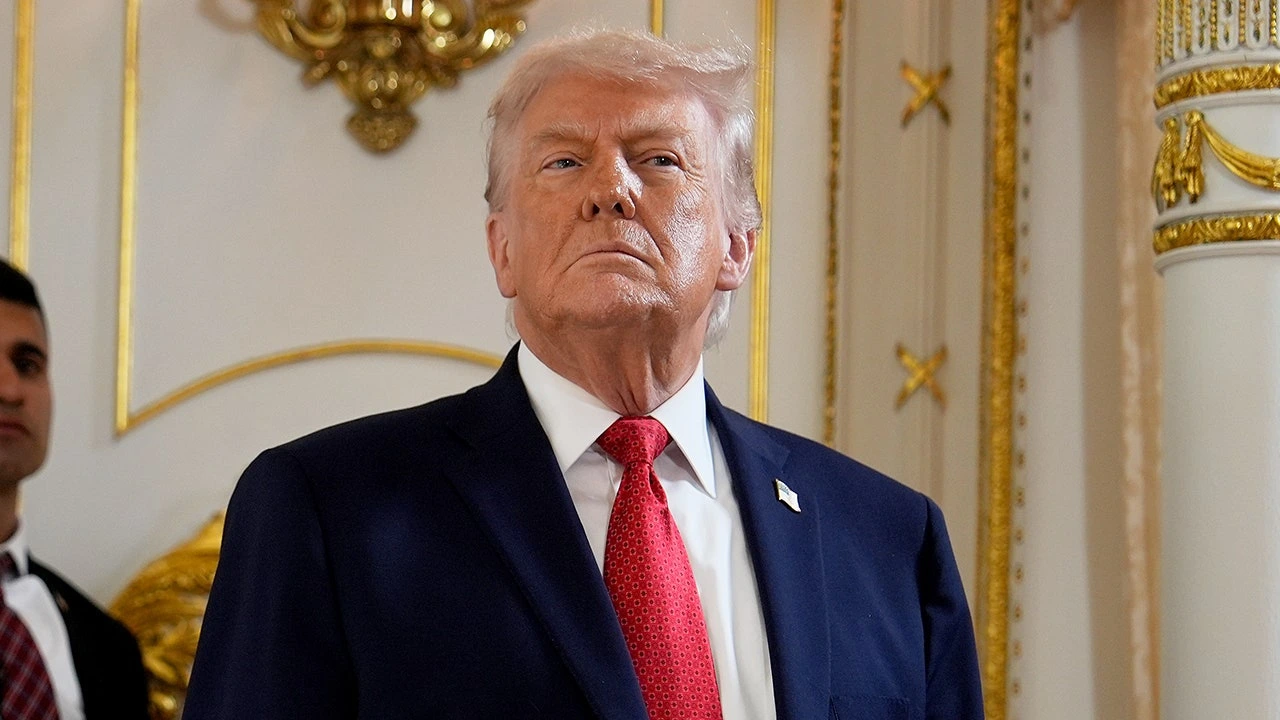

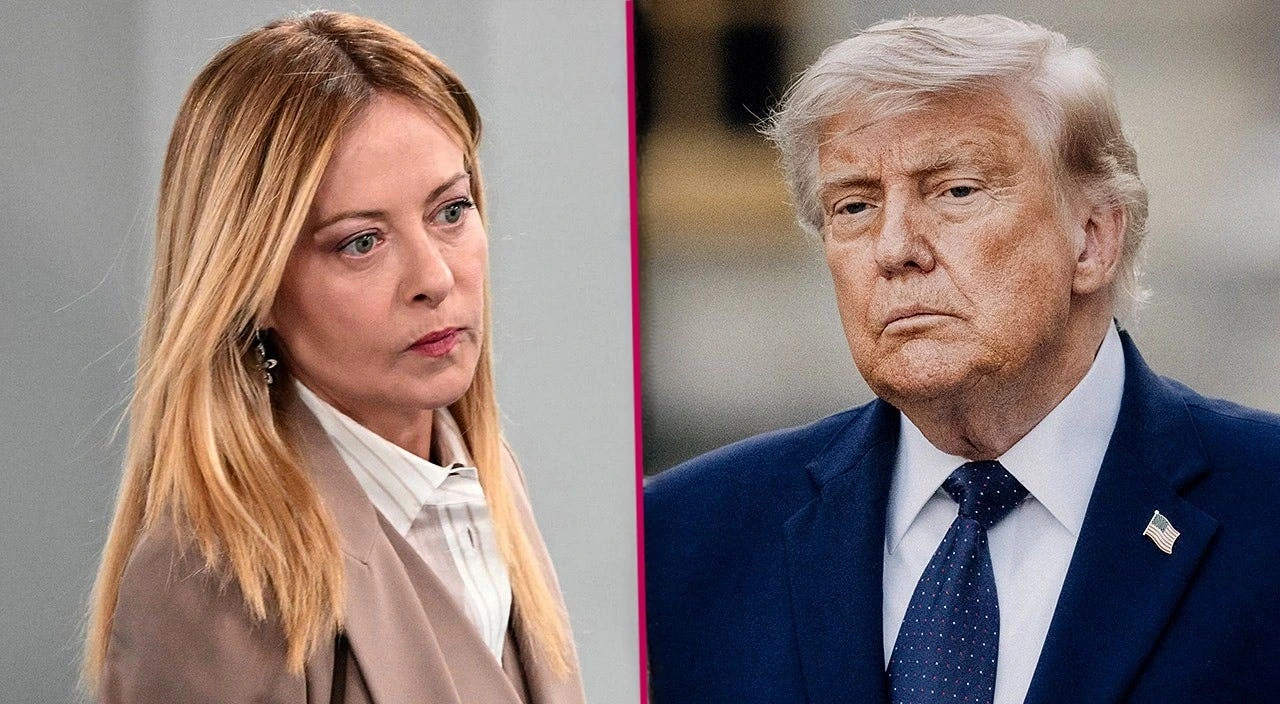
Italy’s government closed ranks on Friday to deliver a rare and forceful rebuke to a sitting US president. Prime Minister Giorgia Meloni called Donald Trump’s claim that she “begged” him for a photo at the recent G7 summit “completely fabricated,” and Italy’s foreign minister abruptly cancelled a planned trip to the United States in response — a sign that one of Trump’s longest-standing European relationships has reached a genuine breaking point.
The dispute began with comments Trump made in an interview broadcast Friday on Italy’s La7 network. Asked about Ukraine, Trump steered the conversation toward Meloni and their meeting at the recently concluded G7 summit in Évian-les-Bains, France, where the two were filmed speaking several times, including alone on a small sofa. According to La7, Trump said Meloni had begged him for a photo opportunity — adding that he wasn’t obligated to agree but felt sorry for her and did so anyway. The broadcaster aired a dubbed version of the exchange rather than the original English audio.
Meloni’s response left no ambiguity. “Donald Trump’s statements are completely fabricated. I am frankly stunned,” she said in a video posted to social media. “I don’t know why the president of the United States behaves this way toward his own allies. After all, this isn’t the first time this has happened.” She closed with a line that has already become widely quoted across Italian media: “Italy and I do not beg.”
A Friendship That Has Been Fraying for Months
Friday’s incident did not emerge from nowhere. Trump and Meloni began their working relationship on remarkably warm terms — she met him at Mar-a-Lago weeks before his 2025 inauguration, was the only EU head of state to attend the ceremony itself, and was repeatedly praised by Trump in the months that followed as “fantastic,” “incredible,” and a genuine friend. Meloni, as the leader of a far-right party aligned with Trump on migration and traditional values, positioned herself early on as a bridge between Washington and the European Union.
That relationship began cracking over Ukraine, an issue where Italy’s support for Kyiv puts it firmly at odds with Trump’s posture. It deteriorated further in April, when Meloni refused to back the US war in Iran — which she has separately characterised as illegal — and defended Pope Leo XIV after Trump publicly criticised the pontiff. Trump responded by criticising Meloni directly in an April interview with Corriere della Sera, a moment she chose not to publicly respond to at the time. Tariffs against Europe and unwavering US support for Israel’s war in Gaza have added further friction. Most recently, Meloni warned sharply against US threats to take Greenland by force, saying she did not believe Washington would actually go that far but that Italy would never support such a move regardless.
ALSO READ: G7 Summit 2026: Trump Arrives in France as Allies Grow Distant
Political scientist Lorenzo Castellani of Rome’s Luiss Guido Carli University suggested Trump’s comments may have inadvertently helped Meloni domestically. “In some ways this was a favor to Giorgia Meloni, in the sense that she was accused until a few months ago of being a sort of Trump’s vassal in Europe,” he said — pointing to chilled Italian public opinion of the American president as a factor that makes pushing back politically advantageous for Meloni now.
Italy’s Government Responds as One
The reaction across Italy’s government was immediate and unified. Italian President Sergio Mattarella, the country’s respected head of state, personally called Meloni in a show of solidarity. Transport Minister Matteo Salvini posted simply: “Whoever attacks Giorgia Meloni attacks all of us.” Defence Minister Guido Crosetto said he did not believe Meloni would ever beg anyone for a photo, “not even under threat.”
Justice Minister Carlo Nordio invoked the historical weight of US-Italy relations directly. “The thousands of crosses marking the graves of American soldiers who died to free us from Nazi-Fascist dictatorship did not deserve such a painful blow to our fraternal ties,” he wrote on social media.
Foreign Minister Antonio Tajani cancelled his planned weekend trip to the United States entirely, describing Trump’s claims as “serious and offensive” toward both Meloni and Italy as a nation. The Foreign Ministry subsequently confirmed that a related business and scientific forum Tajani had been scheduled to attend in Miami was also called off.
Meloni did not let the moment pass without a pointed final observation about Trump’s selective toughness. “I can only say that it’s a shame he doesn’t show the same resolve toward the enemies of the West, toward the enemies of the United States — toward leaders with whom he, on the other hand, is much more accommodating,” she said.
Support for Meloni also arrived from an unexpected source in Europe — Spain’s Socialist Prime Minister Pedro Sánchez, whose politics sit well to Meloni’s left. “About Meloni, first and foremost, all my solidarity,” he told reporters at a European Council meeting. “I offered her all my solidarity against this attack that is not political or personal. I really don’t know how to qualify it.”
The White House did not immediately respond to a request for comment on Meloni’s remarks.
Stay informed. Subscribe to the JournalTodays Newsletter for the latest international politics, transatlantic relations, and current affairs delivered straight to your inbox.