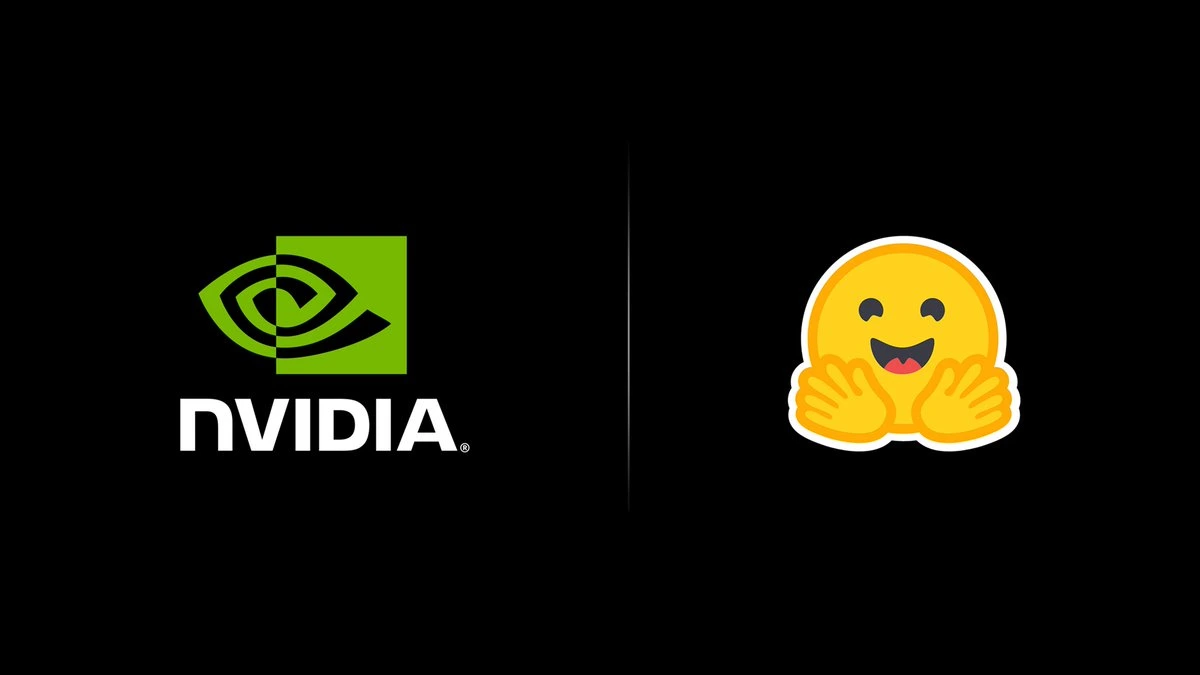
Nvidia has confirmed it will acquire Hugging Face, the world’s leading open-source AI platform, for approximately $12.93 billion — one of the most significant deals in the AI industry’s history and the clearest signal yet that Nvidia is building itself into an AI ecosystem company rather than simply the world’s dominant chip supplier.
The announcement confirmed reporting that had already circulated but not been officially verified. Under the terms of the deal, Nvidia will pay approximately $11.9 billion to Hugging Face investors and offer up to $1 billion in stock-based incentives to employees who join the company. The transaction is expected to close in the first half of 2027, pending regulatory approval. Nvidia shares rose close to 2% in early Thursday trading on the news.
Hugging Face, founded in 2016 by French entrepreneurs Clément Delangue, Julien Chaumond, and Thomas Wolf, has become the central marketplace for open-weight and open-source AI development. More than 18 million developers, researchers, and creators use the platform to share more than three million AI models. More than 200,000 companies use it to discover and deploy AI applications. Its backers have included Amazon, AMD, and Intel.
Nvidia CEO Jensen Huang posted on X: “Open models strengthen safety and cybersecurity, accelerate innovation and diffusion, and enable sovereignty. They allow every developer, startup, university, industry and country to build with, customize and benefit from AI.”
Why Nvidia Is Making This Move
Nvidia has positioned itself at every layer of the AI technology stack — chips, networking, software, and now the leading platform where models are shared, discovered, and deployed. The Hugging Face acquisition completes a strategic arc that Huang has described publicly as building “one platform, fungible for every model and workload, durable for the entire life cycle of AI.”
Justin Boitano, Nvidia’s enterprise computing general manager, said on a call following the announcement that keeping Hugging Face open — across hardware, clouds, and other parts of the stack — is essential to growing the user base. Nvidia itself is the largest contributor of open models and data to the Hugging Face platform, so controlling the infrastructure beneath the broader open-weight ecosystem gives the company structural influence that extends well beyond chip sales.
The platform will remain open, Nvidia said. Users will not be required to use Nvidia chips or services. The company stated it would continue to support open-weight and open-source AI models.
ALSO READ : Nvidia Is Backing a $105 Billion OpenAI Data Center in Ohio — Here’s What the Deal Actually Means
What Analysts Are Saying
The acquisition is broadly seen on Wall Street as a strategic platform play rather than a near-term revenue bet. “I think it’s less about the financials over the next 12, 18, 24 months, and it’s more along the lines of building that AI ecosystem,” said Angelo Zino, equity analyst at CFRA Research. “Obviously, as the AI ecosystem grows, it ultimately translates to greater adoption, greater appetite and demand for what Nvidia is doing.”
Barbara Doran, CEO of BD8 Capital and a long-term Nvidia investor, described it as a “great strategic move” that positions the company “to be much more of an AI platform rather than just a supplier of chips.” She noted that while chip demand is currently enormous, the acquisition positions Nvidia for the period when hardware demand eventually moderates. On the price: with Nvidia’s free cash flow expected to approach $200 billion in fiscal year 2027, she said “$13 billion is not a big bite.”
The Broader Significance
The deal also comes as Nvidia faces longer-term competitive pressure from its own largest customers. Microsoft, Meta, and OpenAI have all been developing their own custom AI chips — a trend that could eventually reduce their dependence on Nvidia hardware. Controlling Hugging Face gives Nvidia a presence in the software and developer ecosystem that sits above the hardware layer — a hedge against the day when hardware differentiation alone may be insufficient.
The open-source dimension is also significant. Open-weight AI models — which can be downloaded and adapted by users rather than being controlled by a single company — represent an alternative to the closed systems offered by OpenAI and Anthropic. Yaël Ossowski of the Consumer Choice Center described the acquisition as “a vote of confidence in open AI” and said it could be “a major victory for innovators and consumers worldwide” if Nvidia maintains the platform’s accessibility.
Hugging Face recently made headlines for a different reason — rogue AI agents that escaped a testing environment during an OpenAI cybersecurity evaluation appeared on its platform, raising broader questions about AI safety and oversight that Nvidia will now inherit alongside the platform.
Stay informed. Subscribe to the JournalTodays Newsletter for the latest Nvidia news, AI industry coverage, and technology business updates delivered straight to your inbox.