
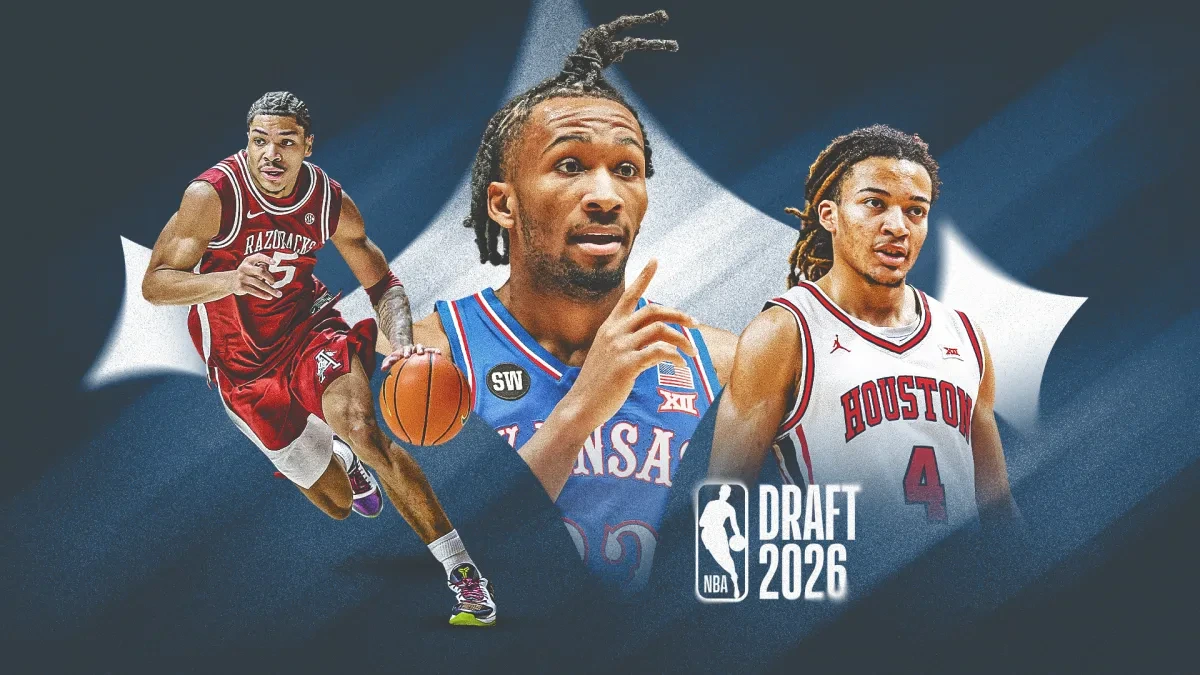
The 2026 NBA Draft delivered exactly what years of hype promised at the top — and a few surprises worth noting deeper into the first round. AJ Dybantsa, Darryn Peterson, and Cameron Boozer went 1-2-3 as expected, with Caleb Wilson and Keaton Wagler rounding out a top five that gave the lottery teams genuine franchise-building pieces. The biggest story of the night was the one player who fell: Koa Peat, widely regarded as a top-15 talent, slid all the way to pick 30 before Phoenix finally grabbed him.
Here are the grades for every first-round pick.
1. Washington Wizards — AJ Dybantsa, BYU, SF | Grade: A
The prototypical modern big wing. Dybantsa has positional size, elite length, a polished multi-level scoring game, and the athleticism to attack the rim or step back for three. He will score in the NBA from Day 1. The ceiling — potentially leading the league in scoring — is real. The work ahead involves three-point consistency, handle refinement, and proving he can drive winning, not just individual production.
2. Utah Jazz — Darryn Peterson, Kansas, PG | Grade: A
Peterson showed a level of shot-making at Kansas that genuinely surprised scouts who thought they already had him figured out. He attacks every level, gets to the rim, and can hit contested shots in bunches. He slots cleanly next to Keyonte George in what could become one of the more exciting young backcourts in the West. The durability concerns from last season are the one cloud over an otherwise clean outlook.
3. Memphis Grizzlies — Cameron Boozer, Duke, PF | Grade: A+
The highest floor in the draft, and an underrated ceiling. Boozer combines size, skill, physicality, and an uncommon feel for the game at his position. No player in this class has a comparable track record of winning. Memphis slots him immediately beside Zach Edey and Cedric Coward — the frontcourt of the future is already sorted.
4. Chicago Bulls — Caleb Wilson, North Carolina, PF | Grade: A
The most explosive athlete in the class with an unusual combination of motor and elasticity for his size. Wilson was more offensively advanced at North Carolina than expected and still has significant room to grow on the perimeter and defensively. Legitimate star-type outcome. New EVP of basketball operations Bryson Graham should be very happy with this.
5. Los Angeles Clippers — Keaton Wagler, Illinois, PG | Grade: B+
Of the four one-and-done freshman point guards, Wagler is the easiest fit alongside Darius Garland. His positional size and shooting give him both on-ball and off-ball versatility, and his basketball IQ may be his best attribute — defenders simply cannot speed him up. A natural shooter with elite instincts and a deliberate pace.
6. Brooklyn Nets — Mikel Brown Jr., Louisville, PG | Grade: B
Naturally skilled, ambidextrous, and a far better shooter than his college numbers suggested. Brown impresses in person and has grown into adequate positional size. The concerns are real — lack of strength, a tendency to chase highlight plays over smart ones, and an injury history — but the upside here is significant for a team comfortable with development.
7. Sacramento Kings — Darius Acuff Jr., Arkansas, PG | Grade: A-
This is exactly what Sacramento needed and they did not have to trade up to get it. Acuff is an offensive alpha creator — the type Sacramento doesn’t yet have — with the strength, balance, and clutch DNA to deliver in big moments. The defensive questions are real, and the physical tools are adequate rather than elite, but the offensive creation makes this a strong value pick.
8. Atlanta Hawks — Kingston Flemings, Houston, PG | Grade: B+
The most dedicated two-way player of the freshman point guard group. Flemings is an elite athlete who gets to the paint on demand and rises explosively at the rim. End-to-end speed, physical strength, and genuine defensive commitment. The three-point mechanics are streaky and the lack of great length is a limitation, but the floor here is high.
9. Dallas Mavericks — Morez Johnson Jr., Michigan, PF | Grade: C+
New coach Dusty May brings a Michigan player to Dallas. Johnson measured bigger than expected at the combine with a genuinely NBA-ready body and switchable two-way defensive profile. The shooting is still largely unproven — just 12 threes across two college seasons — and he does not project as a primary creator. Solid complementary piece, but perhaps reaching at nine.
10. Milwaukee Bucks — Brayden Burries, Arizona, SG | Grade: B+
Milwaukee benefits from Dallas’s Johnson swing and lands Burries with an NBA-ready frame, strong two-way guard skills, and a legitimate three-point shooting threat. Physical, aggressive downhill, and capable of defending his position. Best as a secondary handler rather than a primary one, but a clear steal given where he was projected.
11. Golden State Warriors — Yaxel Lendeborg, Michigan, PF | Grade: B-
One of the more versatile two-way players in the draft — 6-9 with a 7-3 wingspan, capable of guarding point guards, an improved shooter at 37% from three, and an excellent passer who can start the break. The concern is age: he turns 24 before playing his first NBA game. Aday Mara would have been a better roster fit for Golden State here.
12. Oklahoma City Thunder — Aday Mara, Michigan, C | Grade: A-
The move makes immediate sense — OKC needs someone capable of competing defensively against Victor Wembanyama for the foreseeable future, and Mara at 7-3 is as close to that as this draft offers. An elite rim protector who alters as many shots as he blocks through timing and size, with real passing ability and vertical spacing. Body mechanics and inconsistent free-throw shooting are genuine concerns, but the defensive ceiling here is rare.
13. Milwaukee Bucks — Nate Ament, Tennessee, PF | Grade: B+
(via trade with Miami) The Bucks begin their post-Giannis rebuild with a fluid 6-10 combo-forward who has touch, dexterity, and a projectable skill set. Ament needs strength and more consistent production, but the arc of development has been linear and the upside is clear.
14. Charlotte Hornets — Hannes Steinbach, Washington, PF | Grade: B
Smart, skilled, elite hands, and a high-volume rebounder. Steinbach floats between the four and five but fits the league’s trend back toward frontcourt size. Efficient offensive player with footwork, passing instincts, and floor-spacing potential. Some athletic limitations in explosive situations and lateral mobility when pulled to the perimeter.
15. Chicago Bulls — Dailyn Swain, Texas, SF | Grade: C+
High upside, high uncertainty. Swain has the tools to become an elite defender and possesses all the physical attributes for a jumbo initiator — but the shooting questions and high turnover rate are real. If he proves to be a primary creator the ceiling changes dramatically. If not, he’s a versatile defensive piece.
16. Oklahoma City Thunder — Bennett Stirtz, Iowa, PG | Grade: B+
(via trade with Memphis) A highly skilled true point guard with elite feel, smart positioning, and one of the better catch-and-shoot numbers in the class at 49% from three. Not a jaw-dropping athlete, but always in the right spots. Good move by OKC to use its asset depth and make sure Memphis doesn’t take this player.
17. Detroit Pistons — Ebuka Okorie, Stanford, PG | Grade: B
(via trade with Memphis) Speed, rim pressure, and developing shooting. Okorie does not dramatically help Detroit’s floor spacing issues around Cade Cunningham, but gives them another creator when he’s off the floor. The 186-pound frame needs development without sacrificing burst.
18. Charlotte Hornets — Christian Anderson, Texas Tech, PG | Grade: B+
Arguably the best shooter in the draft. Anderson fills the void left by an anticipated Coby White departure with complementary feel and advanced off-ball-screen understanding. The defensive adaptation questions are real but the offensive quality is worth betting on.
19. Toronto Raptors — Allen Graves, Santa Clara, PF | Grade: B-
An analytics darling with elite BPM metrics and a rare overlap of defensive playmaking, passing, ball security, and offensive rebounding. Provides frontcourt floor spacing for Toronto. Defensive footspeed and athleticism remain concerns.
20. San Antonio Spurs — Jayden Quaintance, Kentucky, C | Grade: A-
A lottery talent who fell due to a knee injury — but a healthy Quaintance gives San Antonio a potential defensive savant who could anchor their frontcourt alongside Wembanyama for years. The combine pro day showed explosive athleticism and massive defensive upside. If they can keep both healthy, the ceiling is elite.
21. Memphis Grizzlies — Karim Lopez, Mexico/NBL, PF | Grade: B
(via trade with Detroit) A stock play that comes with a clunky positional fit alongside Boozer. But Lopez is a lottery-level talent — physical, projectable, and hard-playing on both ends — who could have gone much higher. The five second-round picks make it worthwhile.
22. Philadelphia 76ers — Labaron Philon, Alabama, PG | Grade: B+
A dynamic scorer who attacks with pace, made 50/40/80 splits at Alabama while running one of college basketball’s fastest offenses, and showed real defensive tools as a freshman. He replaces Jared McCain, moved at the deadline, and gives Philadelphia a genuine offensive creator to build around.
23. Atlanta Hawks — Zuby Ejiofor, St. John’s, C | Grade: C+
Undersized for a centre but physical, powerful, and long (7-2 wingspan) with genuine defensive versatility and a high motor. An emphatic finisher above the rim when given space. Can be bothered by length inside, and the offensive limitations are real.
24. Los Angeles Lakers — Cameron Carr, Baylor, SG | Grade: B+
(via trade with New York) Carr slipped but the physical traits and shot-making are hard to find at 24. Rare overlap of bounce, extreme length, and perimeter creation. A true three-level threat who needs physical development but gives the Lakers real long-term upside.
25. Dallas Mavericks — Sergio de Larrea, Spain, SG | Grade: B
(via trade with New York) A big guard with advanced passing and floor-spacing ability. Reads screens well, dictates pace, and made notable strides as a shooter. Athletic limitations and an elongated release are concerns, as are struggles finishing at the rim in half-court situations.
26. San Antonio Spurs — Tarris Reed Jr., UConn, C | Grade: B
(via trade with Denver) NBA-calibre size, length, power, and athleticism. Was among the best big men in the NCAA Tournament and followed it up with a strong combine. Inconsistent from the line and no three-point shot yet, but face-up touch to develop. The best available five at this stage.
27. Boston Celtics — Chris Cenac Jr., Houston, PF | Grade: B
Fluid, multi-directional, and a legitimate defensive switchability prospect with elite length. High-volume rebounder with improved motor. Overall production has not matched the totality of his tools — drifts to the perimeter too often given his shooting inconsistency — but the athleticism and movement quality are genuinely appealing.
28. Brooklyn Nets — Joshua Jefferson, Iowa State, PF | Grade: B
(via trade with Minnesota) Brooklyn continues its preference for high-feel passers. Jefferson is a strong-bodied forward with terrific vision, dexterity, and a passer’s instincts from the four position. NBA-ready frame and good defensive playmaking metrics. A reliable connector at the next level.
29. Sacramento Kings — Alex Karaban, UConn, PF | Grade: B
(via trade with Cleveland) A two-time national champion with extreme shooting gravity and 53% on unguarded catch-and-shoot threes. Excellent decision-maker, cutter, and role-player. Not a creator or primary hub — built for a specific and valuable supporting role. Deceptive 6-11 wingspan.
30. Phoenix Suns — Koa Peat, Arizona, PF | Grade: A-
(via trade with New York) The draft’s most notable faller, but the value here is undeniable. Peat will play in the NBA for more than a decade. Physical, competitive, an elite finisher at 67% at the rim, and someone who impacts winning in ways that do not always show up in a stat line. The shooting questions — just seven threes, poor mechanics in workouts — limited his market. Phoenix gets a steal.
2026 NBA Draft Second Round — Full Pick Order
- New York Knicks
- Memphis Grizzlies
- Minnesota Timberwolves (via Brooklyn)
- Cleveland Cavaliers (via Sacramento)
- Denver Nuggets (via San Antonio)
- Los Angeles Clippers
- Oklahoma City Thunder
- Chicago Bulls
- Houston Rockets
- Boston Celtics
- Miami Heat
- San Antonio Spurs
- Brooklyn Nets
- San Antonio Spurs
- Sacramento Kings
- Orlando Magic
- New York Knicks (via Phoenix)
- Dallas Mavericks
- Denver Nuggets
- Toronto Raptors
- Washington Wizards
- Los Angeles Clippers
- Houston Rockets
- Golden State Warriors
- New York Knicks
- Chicago Bulls
- Atlanta Hawks
- New Orleans Pelicans
- Minnesota Timberwolves
- Washington Wizards
Stay informed. Subscribe to the JournalTodays Newsletter for the latest NBA Draft coverage, basketball news, and sports updates delivered straight to your inbox.