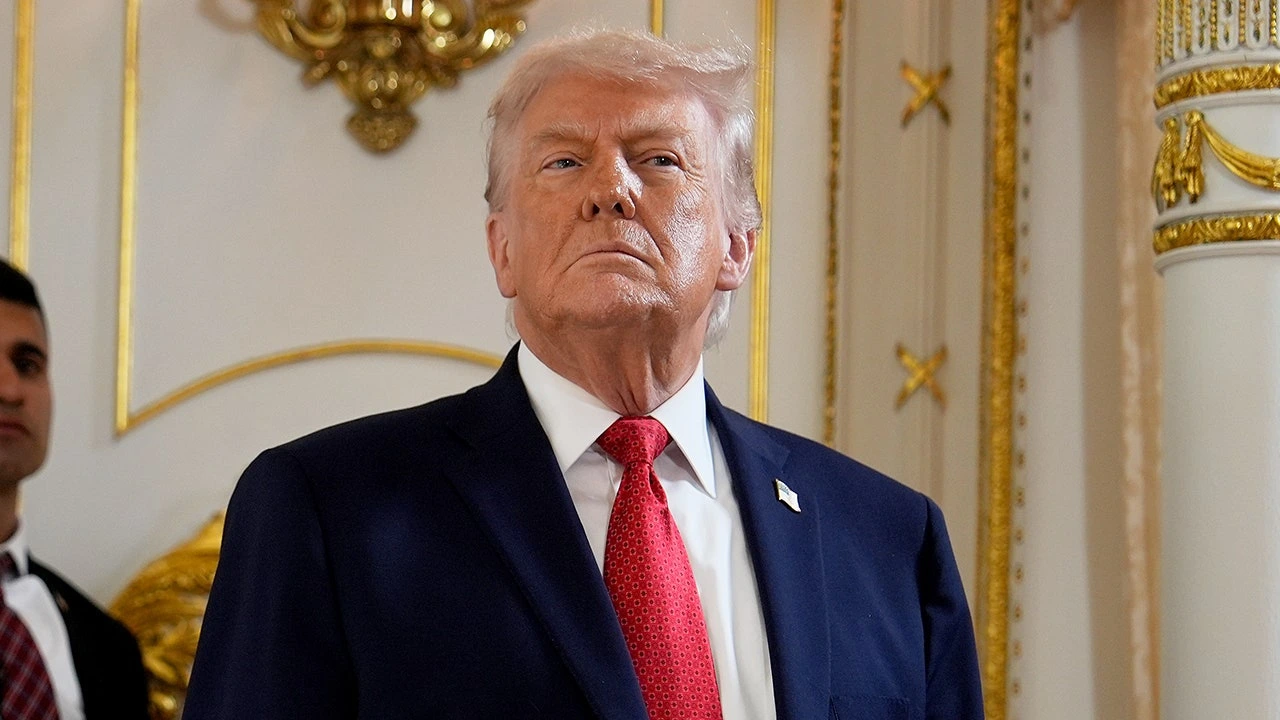


President Donald Trump is facing a new legal challenge after two organizations sued to stop a paid Truth Social service that gives subscribers faster access to his posts, arguing the arrangement allows government information to be sold to the highest bidder.
The lawsuit, filed Wednesday in federal court in Manhattan, targets Truth API, a subscription service launched by Trump Media that offers customers near-instant access to posts published by some of the platform’s most-followed accounts. Plaintiffs claim the service crosses a constitutional line because many of Trump’s posts contain official government announcements capable of influencing financial markets.
The case has renewed questions about where the boundary lies between Trump’s role as president and his ownership interest in the social media company behind Truth Social.
Lawsuit Calls Service “Unconstitutional”
The complaint was filed by The Intercept and the Freedom of the Press Association, both of which argue that Americans should receive official government information at the same time rather than through a tiered system based on who can afford premium access.
According to the lawsuit, subscribers can pay as much as $100,000 per month for quicker delivery of posts from Truth Social’s most prominent accounts, including Trump’s own profile.
The plaintiffs describe the arrangement as an unconstitutional system that gives paying customers preferential access to government communications while financially benefiting the president through a company in which he remains the largest shareholder.
The lawsuit argues that there is no legitimate public interest in allowing official government announcements to become part of a premium commercial product.
Why Trump’s Posts Matter
The complaint emphasizes that Trump’s Truth Social account has become one of his primary ways of communicating policy decisions and other official announcements.
Since returning to office in January 2025, Trump has reportedly published between 9,000 and 11,000 posts on the platform.
According to the lawsuit, many of those messages appear before any corresponding statement from the White House, making Truth Social the first place where the public learns about certain government actions.
Because Trump’s posts often address tariffs, military developments, economic policy and other market-sensitive topics, the plaintiffs argue that even a slight timing advantage could provide valuable information to subscribers.
What Is Truth API?
Trump Media introduced Truth API earlier this year as a commercial service designed for organizations that depend on receiving information as quickly as possible.
During the company’s recent earnings call, CEO Kevin McGurn said the product delivers machine-readable feeds of publicly available posts within milliseconds of publication.
“Our customers will get published and publicly available posts fractionally faster,” McGurn told investors.
He added that the company has already signed more than 10 customer agreements, with subscription prices generally ranging from $60,000 to $100,000 per month.
McGurn also said Trump Media is discussing future partnerships with major technology companies, financial data providers, news organizations and developers of large language models as it looks to expand the platform’s reach.
More Than Trump’s Account Is Included
The service isn’t limited to the president’s profile.
According to court filings, Truth API currently provides accelerated access to posts from the platform’s ten most-followed accounts.
Those include the White House, Vice President JD Vance, FBI Director Kash Patel, White House Press Secretary Karoline Leavitt, Transportation Secretary Sean Duffy and Health and Human Services Secretary Robert F. Kennedy Jr.
Plaintiffs argue that packaging official government communications into a paid commercial product raises broader constitutional concerns than simply offering a premium social media feature.
White House Yet to Respond
As of Wednesday, the White House had not publicly commented on the lawsuit.
Along with President Trump, the complaint names executive assistant Natalie Harp, White House Deputy Chief of Staff Dan Scavino, the Executive Office of the President, and the White House Office as defendants.
The case is expected to focus on whether providing paying customers with earlier access to presidential communications violates constitutional protections and improperly mixes government responsibilities with private business interests.
Whatever the outcome, the lawsuit is likely to intensify scrutiny over how official presidential announcements are distributed in the digital age—and whether speed itself can become a commodity.
Stay informed. Subscribe to the JournalTodays Newsletter for the latest political news and US current affairs delivered straight to your inbox.